





Yacht Jobs & Careers
Explore Yacht Jobs by Role
Yacht crew are organised into departments. Each has its own entry points, qualifications and progression.
Deck & Skipper Jobs
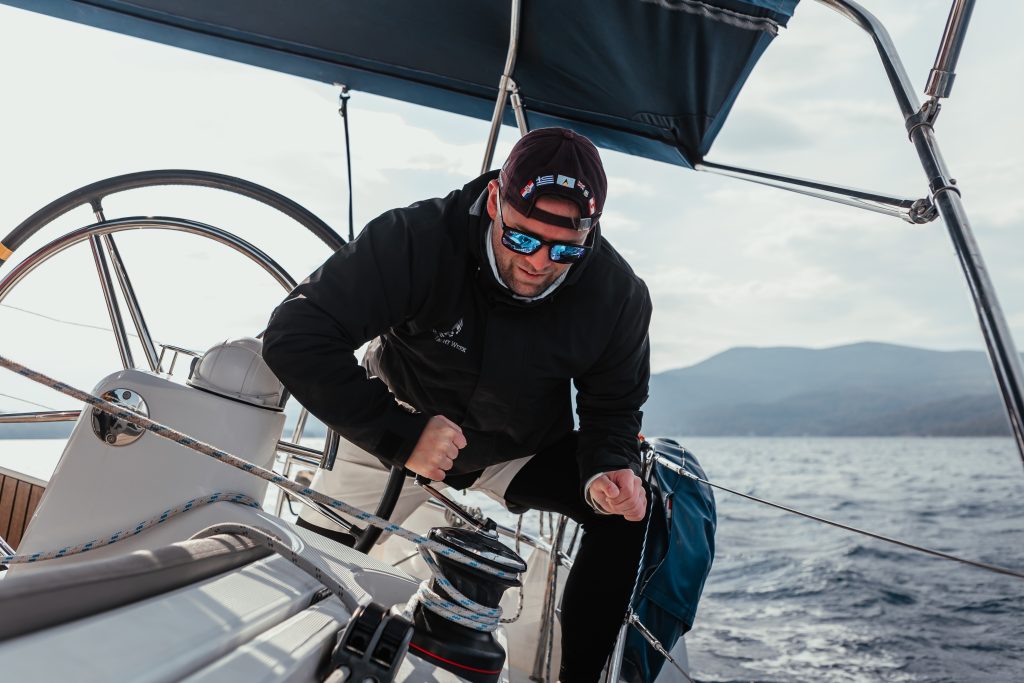
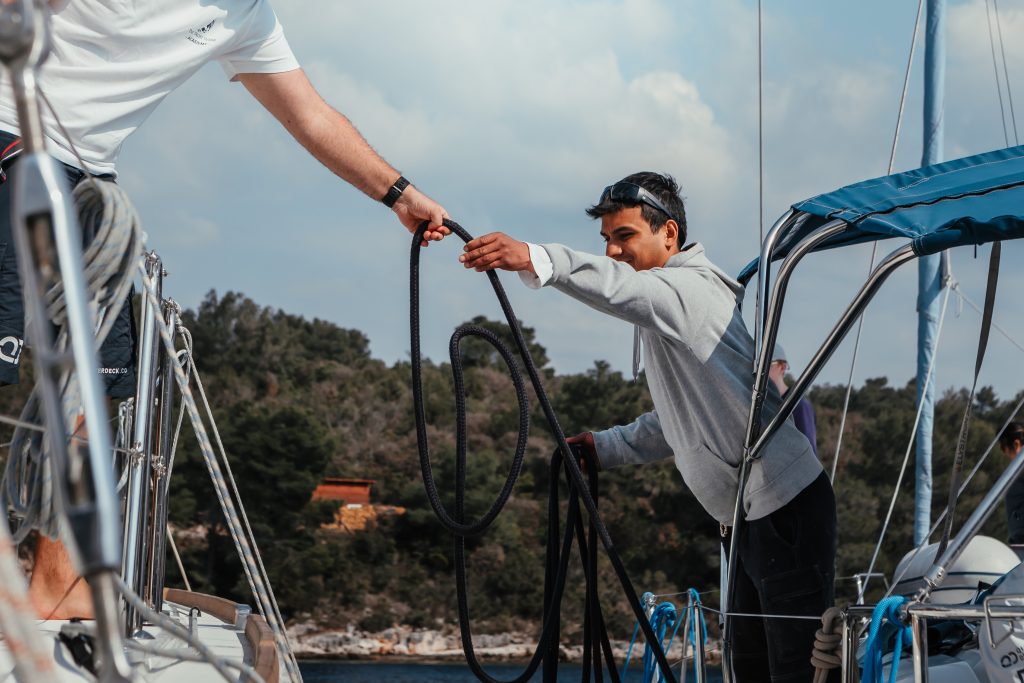
The deck department is responsible for sailing, navigation, docking, anchoring and the exterior of the yacht. On a 40-60ft charter sailing yacht, the skipper leads this work alone or with a small crew. On larger yachts, deck work is split across deckhands, bosuns and officers.
Quarterdeck trains skippers for 40-60ft sailing yachts through Sailing Academy and Skipper Academy.
Interior & Hospitality Jobs
Hospitality crew manage the guest experience: service, presentation, provisioning and the atmosphere onboard. On smaller charter yachts, one host covers both hospitality and cooking. On larger yachts, stewards and stewardesses handle interior service while a chef runs the galley.
Quarterdeck trains hosts through Host Academy, a one-week course onboard working charter yachts.
Chef & Culinary Jobs
Chefs are responsible for all food onboard, from menu planning and provisioning to cooking in a compact galley. The same skills apply in private villas and catered chalets.
Galley Academy builds the cooking foundation for beginners. Culinary Academy is for experienced hosts and chefs working toward private chef standards.
Engineering & Technical Jobs
Technical crew keep the yacht running: engines, generators, electrical systems, navigation electronics and onboard technology. These roles suit people with mechanical, electrical or engineering backgrounds.
Quarterdeck does not run a technical academy. Qualified technical crew can register on the staff marketplace, where operators search for marine engineers, mechanics and electricians.
Guest Experience and Event Roles
Charter weeks and sailing events also need specialists: yoga and pilates instructors, fitness coaches, guest experience managers, event coordinators, DJs, and media and event crew. These roles are listed on the Quarterdeck staff marketplace alongside yacht crew.
What Does a Career on a Yacht Look Like?
Yacht work is not one job. It is an industry with a clear structure.
Entry-level and experienced roles. Some positions, such as deckhand, steward or host, are open to people new to yachting. Others, such as skipper, captain or chief engineer, require certification and years of experience.
Seasonal and permanent work. Most entry-level jobs are seasonal. The Mediterranean season runs from around May to October, and the Caribbean from November to April. Many crew work both. Permanent positions, mostly on private yachts and larger vessels, usually come after a few seasons.
For pay by role, see the Yacht Crew Salary Guide.
How to Get a Job on a Yacht
The pathway is broadly the same for every department:
01
Choose a department and role that fits your background.
02
Understand the qualifications that role requires.
03
Complete mandatory training and medical requirements. For commercial yachts, this usually means STCW Basic Safety Training and an ENG1 medical.
04
Build relevant experience and practical skills.
05
Prepare a one-page yachting CV and collect references.
06
Apply for suitable positions.
07
Prepare for interviews and trial days.
08
Progress as your experience and qualifications grow.
For the full step-by-step guide, see How to Work on Yachts.
Yacht Jobs for Different Experience Levels
First-time yacht crew. Entry-level deck and hospitality roles are designed for people new to the industry. Start with Deckhand Jobs or Host / Chef Jobs.
People with hospitality experience. Hotel, restaurant and events experience transfers directly into host and steward roles. Host Academy adapts those skills to a working charter yacht.
Experienced sailors. If you sail well but have not worked professionally, Skipper Academy covers the step from recreational sailing to leading paying guests.
Chefs and culinary professionals. Professional kitchen experience is valued across yacht, villa and chalet work. See Private Chef Jobs.
Engineers, electricians and technicians. Land-based trade experience transfers well, though marine-specific systems and certifications are needed. See Yacht Mechanic Jobs.
People coming from other industries. Many crew start with no maritime background. Professional experience transfers, but the maritime qualifications required depend on the role.
Yacht Crew Qualifications and Training
Qualifications decide which roles you can apply for and how quickly you progress. Requirements vary by position, vessel size and responsibility. A host on a 45ft charter yacht and a captain on a 50m superyacht need very different certificates.
The relationship works like this: training leads to certification, certification makes you eligible, eligibility opens employment, and experience plus further qualifications drive progression.
For role-specific requirements, see:
Find the Right Yacht Career Path
If you… | Consider | Start here | Love sailing and navigation | Deck and skipper roles | Sailing Academy |
|---|---|---|
Already sail confidently and hold a licence | Professional skipper work | Skipper Academy |
Have a hospitality or service background | Host and interior roles | Host Academy |
Enjoy cooking but lack kitchen experience | Host roles, via a cooking foundation | Galley Academy |
Are a working chef or experienced host | Private and high-end chef roles | Culinary Academy |
Have a mechanical or electrical background | Engineering and technical roles | Yacht Mechanic Jobs |
Want to lead | Progression toward senior operational roles | Captain Jobs |
Working on Charter vs Private Yachts
Charter yachts
Charter yachts carry paying guests, usually on weekly itineraries. Guests change every week, the schedule follows the charter calendar, and crew deliver a full guest experience each time. Most people entering the industry start here.
Private yachts
Private yachts are used by the owner and their family or guests, without a commercial charter arrangement. Guests are consistent, the schedule follows the owner, and crew relationships tend to be longer term.
Mixed-use yachts
Mixed-use yachts are used by the owner part of the year and chartered out for the rest. Crew work both patterns, which means adapting to a different rhythm depending on who is onboard.
The main differences are in guest interaction, work pattern, how structured the operation is, and what is expected of the crew day to day.
Where yacht crew find jobs

Direct applications
Contacting operators and yachts directly, including visiting marinas in charter hubs, still works, especially for entry-level and day work.

Crew recruitment and placement
Agencies and placement providers match crew with operators and owners.

Professional networks and references
The industry is small. Many jobs come through captains, operators and former crewmates.

Yacht job platforms
Crew platforms let operators search for available crew by role, dates and location.

Training providers
Some academies connect graduates with work. At Quarterdeck, the academies and placement are part of the same process.

The Quarterdeck Staff Marketplace
Anyone can register on the Quarterdeck Staff Marketplace and choose their role. Our team then reviews your CV and interviews you before your profile is verified and becomes visible to charter operators and fleet managers.
Why Train and Find Work with Quarterdeck?
Quarterdeck has placed crew for over 20 years, with more than 6,500 host, skipper, and chef placements across yachts, villas, and chalets.
Training in real working conditions. Sailing, Skipper, Host and Galley Academy run on working charter yachts in active charter areas, including Croatia, Greece and the BVI. Culinary Academy also runs at Fort George on Vis Island, Croatia.
Taught by working professionals. Courses are led by experienced skippers and private chefs.
Assessed against professional standards. Each academy ends with an honest assessment. For instance, at Host Academy, instructors assess against six formal criteria across the week, and every student receives a clear outcome on the final day.
Preparation before you arrive. Every academy has a pre-course preparation guide, so students arrive ready to focus on the work.
A connection to real work. Around 90% of academy students pass. New skippers and hosts typically work 5-7 weeks in their first season, depending on availability and performance.
Start Your Yacht Career with Quarterdeck
Already qualified and experienced? Register your profile on the Quarterdeck Staff Marketplace.
Not qualified yet? Explore Sailing Academy, Skipper Academy, Galley Academy, Host Academy or Culinary Academy.
Not sure which path suits you? Contact us and we will help you work out where to start.
Looking to hire crew? Go to Crew Hire.