Culinary Academy
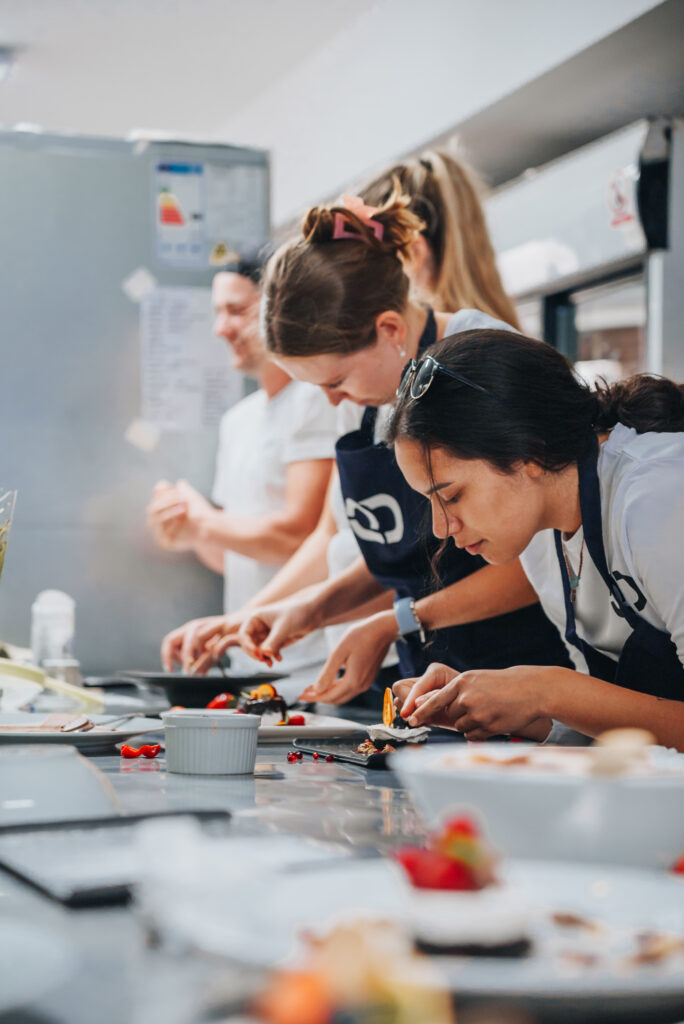
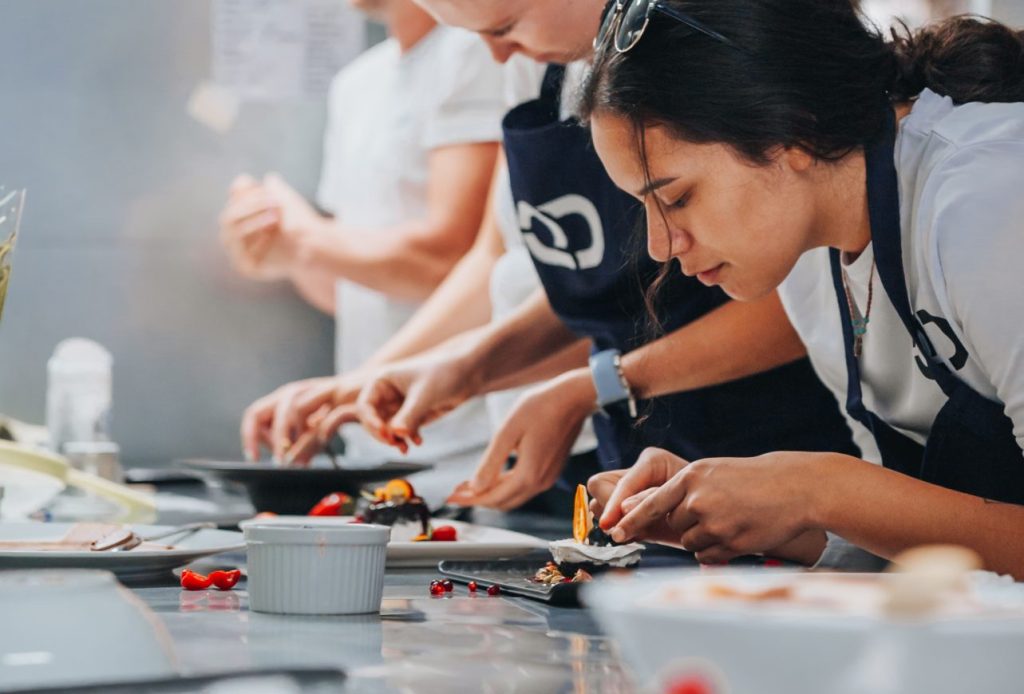
A 7-day, high-intensity cooking course for chefs ready to push past the basics. You train in a real working kitchen alongside professional chefs, in an environment built around timing, organisation, consistency, and pressure. The same demand real restaurant and yacht-galley work makes every day.
This is an advanced course, not an introduction. It is the right next step if you have already worked through the fundamentals (through Host Academy, in your own kitchen, or on the job) and you are ready for the level above.
Courses Dates
The Culinary Academy runs multiple times per season in two editions, with the same curriculum and standards applied across both.
The land-based edition runs at Fort George on Vis Island, Croatia, in a professional-grade kitchen. You train alongside working chefs from yacht and high-end hospitality backgrounds, building fundamentals in kitchen systems, preparation flow, timing, and consistency. The environment is focused, distraction-free, and built for high-output cooking.
The yacht-based edition is delivered onboard a working sailing yacht. We run it at sailing destinations selected each season based on demand and conditions, currently the British Virgin Islands. You live and work in a yacht galley alongside a skipper and chef instructor, learning to cook in the conditions a real charter week creates: tight space, shared responsibility, sailing motion, and constant coordination with the rest of the crew.
Across both editions, the focus is the same: practical cooking skills that hold up under pressure (flavour, speed, kitchen systems, presentation, dietary confidence, and service flow), at the level professional environments demand. The setting is what changes. Fort George suits chefs who want a stable, high-output professional kitchen. The yacht-based edition suits chefs who want the immersion of a working galley on a moving yacht.
BVI
3 - 10 Jan 2027
BVI
10 - 17 Jan 2027
Croatia
8 - 15 May 2027
Why train with Quarterdeck
This culinary academy training program focuses on the skills you actually need in professional kitchens where timing matters, space is limited, and guests expect consistency.
- 20 years training hosts and chefs for the charter industry
- 6,500+ host and chef assignments placed across yachts, private villas, and chalets
- A global placement network that opens to graduates we know we can stand behind
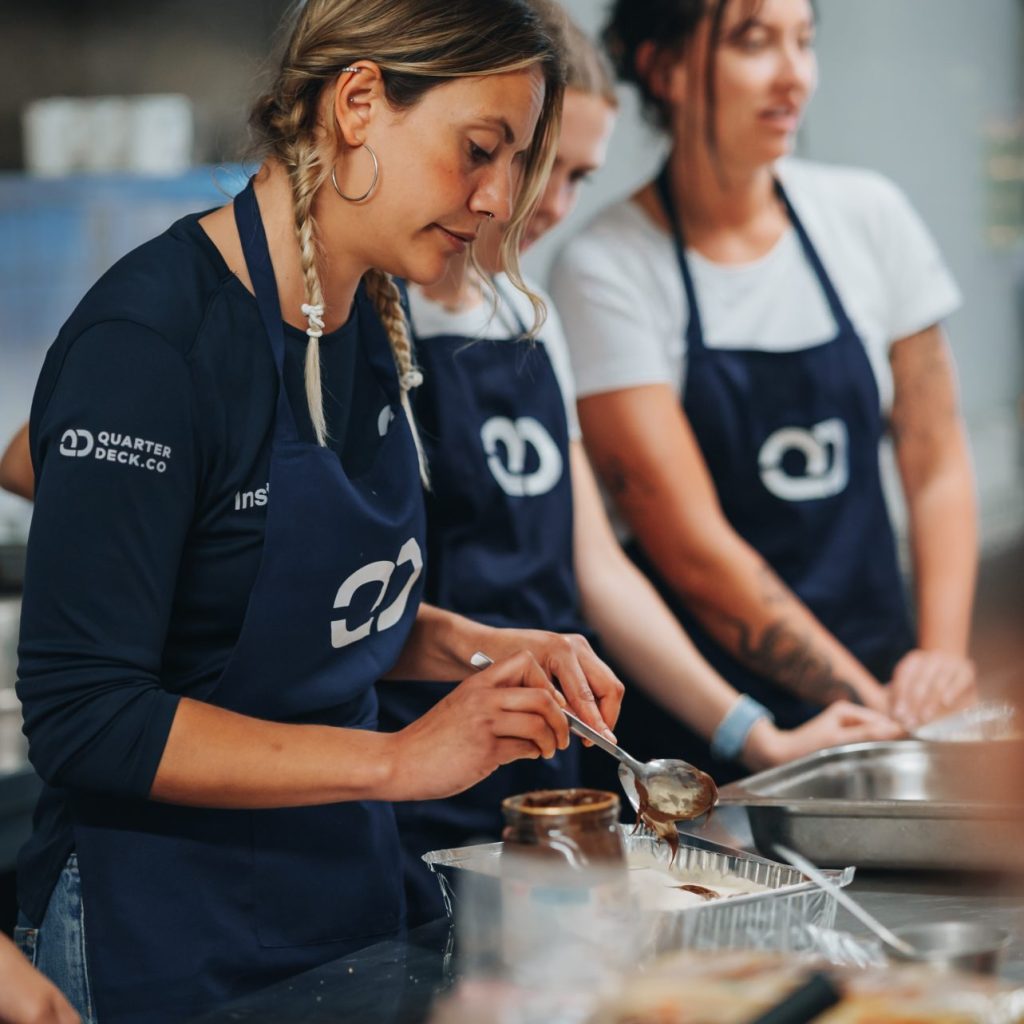
- Working pro chefs as instructors, all currently active in yacht galleys, private villas, and chalets, top-rated by both guests and colleagues
- That experience is why we can be selective on who we accept, and confident on who we recommend afterwards.
Course overview
The curriculum is built around the systems professional kitchens actually use: how hosts and chefs work onboard during charter seasons, and the same fundamentals that hold up in restaurants, villas, and at home.
This professional cooking course is best for
- Host Academy graduates ready to push beyond the fundamentals
- Working hosts looking to elevate technique, presentation, and menu execution
- Serious home cooks ready for a high-intensity professional kitchen week
- Aspiring chefs moving toward restaurant or private-chef work
- Career-changers committing fully to a culinary path
Outcome: Outcome: The practical skills to cook confidently and at pace in any serious kitchen: restaurant, private villa, yacht galley, or your own dinner parties.
Duration
7 days
Location
Fort George (Vis Island, Croatia), & British Virgin Islands (yacht based)
What you’ll learn
The curriculum focuses on the skills you actually need in professional kitchens, where timing matters, space is limited, and guests expect consistency.
Kitchen fundamentals that translate anywhere
- Knife skills, prep speed, and kitchen organisation
- Heat control, seasoning, balance, and building flavours properly
- Core techniques you’ll use in yacht galleys, home kitchens, and restaurants
Service systems that hold up under pressure
- Kitchen setup, hygiene, safety, and workflow
- Timing + pacing for breakfast/lunch/dinner routines that actually run smoothly
- Cooking in tight spaces, warm weather, and changing conditions: yacht galleys, small kitchens, anywhere production matters
Menu planning & provisioning
- Designing menus that feel premium but are realistic to execute
- Provisioning strategy: shopping lists, budget control, storage, and reducing waste
- Building flexible menus with smart swaps for availability and dietaries
Cooking formats you will use for life
- Breakfast systems: fast plates, buffets, and crowd-pleasers with minimal stress
- Lunch builds: bowls, wraps, mezze, salads, tacos that wow without the chaos
- Dinner execution: family-style feasts, elevated mains, sides, sauces, and timing
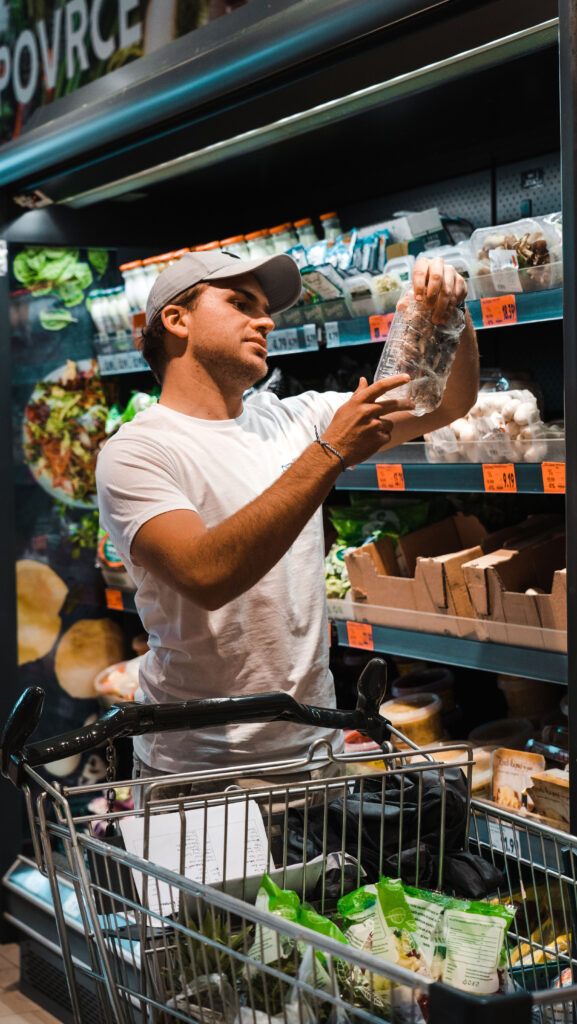

Dietaries & allergy confidence
- Delicious, reliable options for vegetarian (V), vegan (VE), gluten-free (GF), dairy-free (DF), pescatarian (pesc), nut-free, and more
- Cross-contamination awareness + practical guest communication
- Making dietary plates feel equal, not the boring option
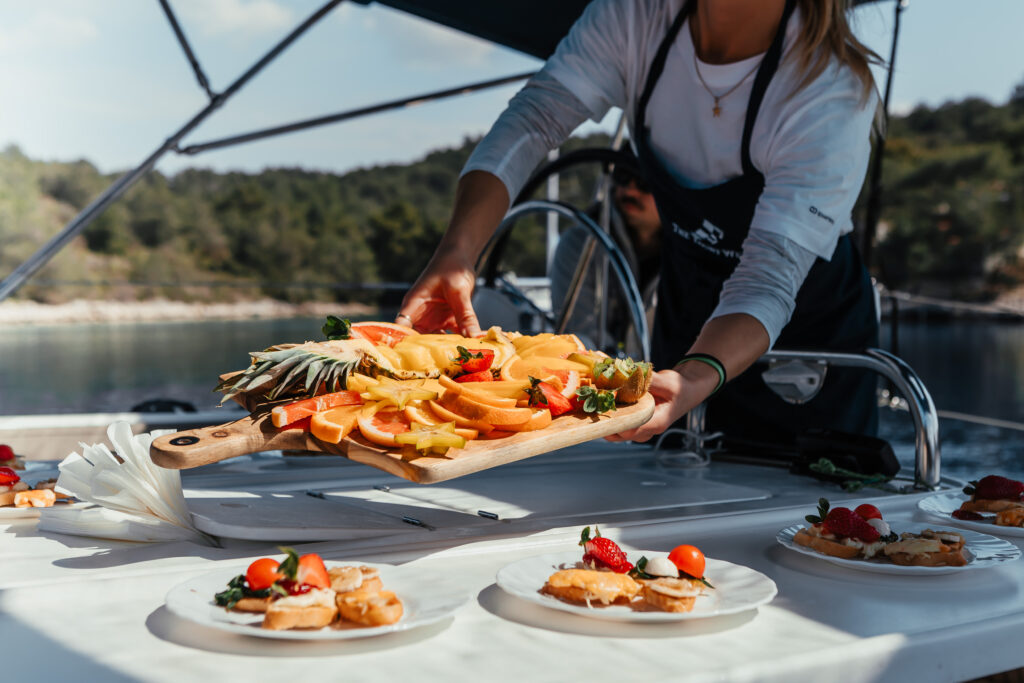
Plating & presentation
- How to make simple dishes look premium
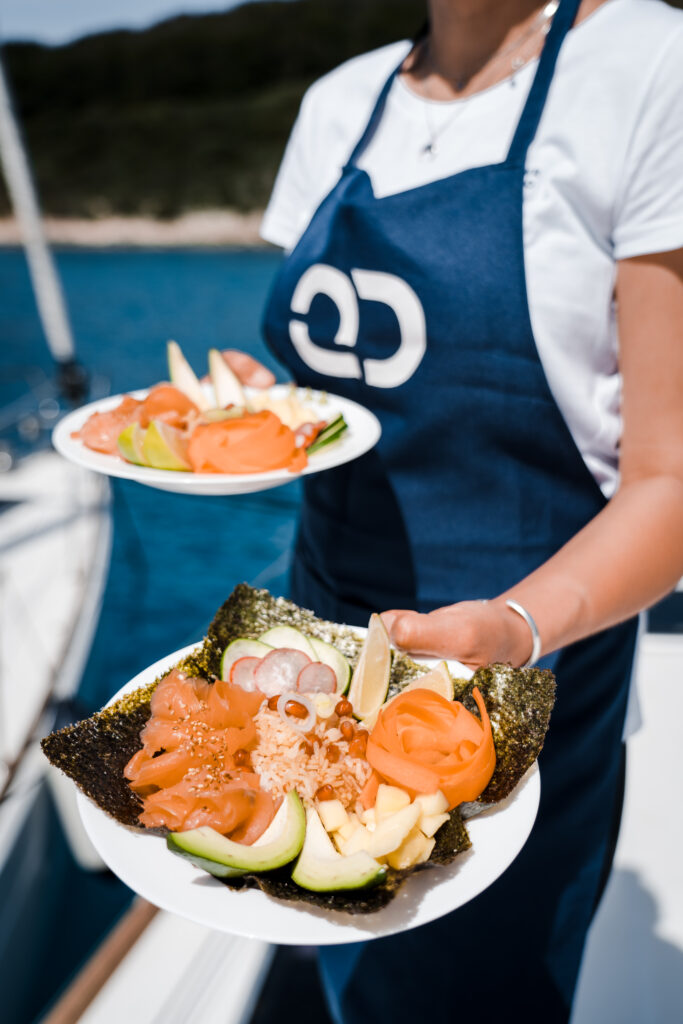
- Garnishes, texture, colour, and yacht-style finishing
- Photograph-worthy dishes for your portfolio, your social, or your own dinner table
How the week works
You cook every day, every meal. Not observe.
- Chef-led technique sessions (fundamentals + pro methods)
- Service-flow sessions led by working chefs and hosts (speed, timing, kitchen systems)
- Daily Culinary Academy blocks: breakfast builds, lunch service, dinner execution
- Real-world scenarios: last-minute changes, dietary curveballs, and limited provisioning
The Culinary Academy is structured around real kitchen workflows: breakfast prep, lunch service, and dinner execution. You’ll work through the same pressure points chefs and hosts face onboard (timing issues, dietary changes, and limited provisioning) with guidance and feedback throughout.
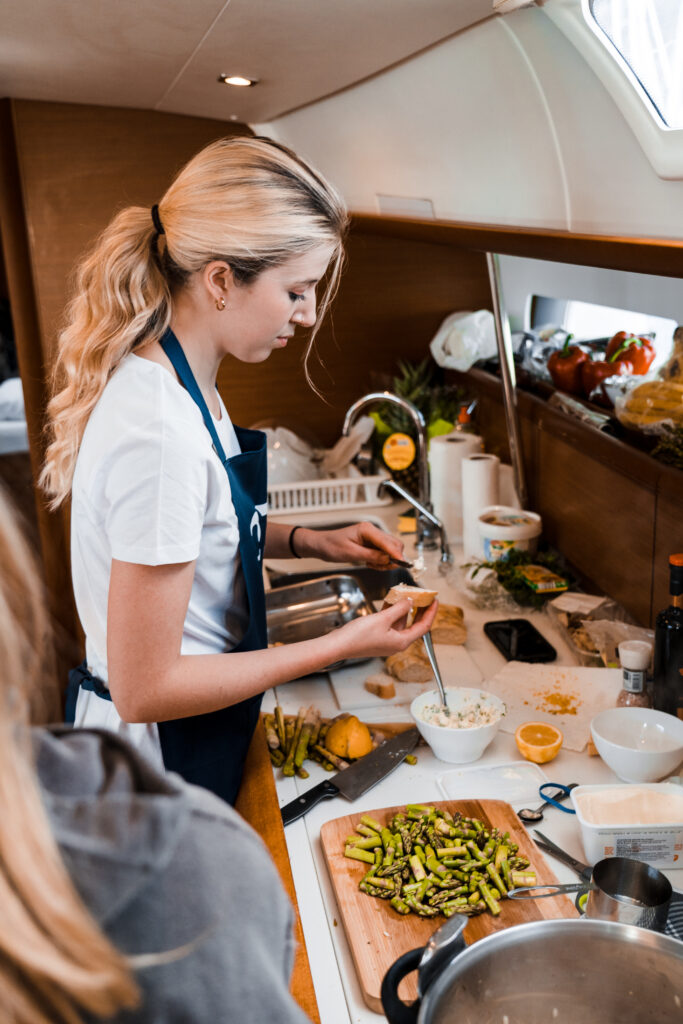
Training Environments
Fort George
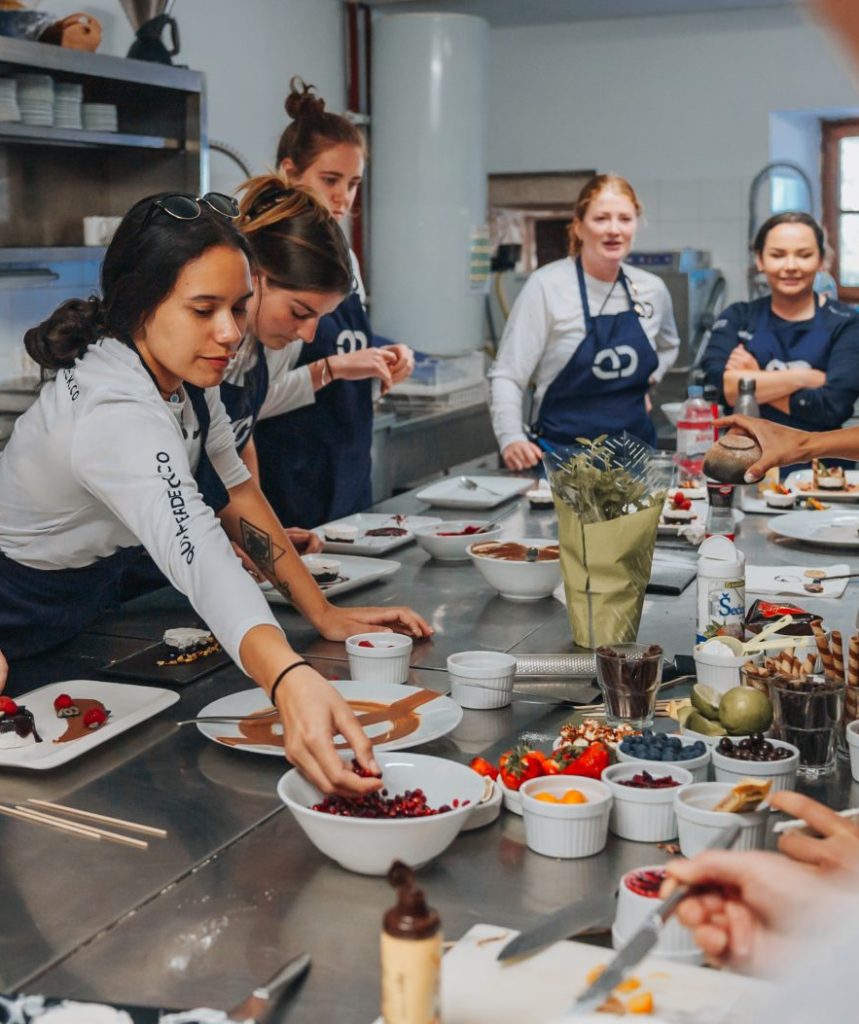
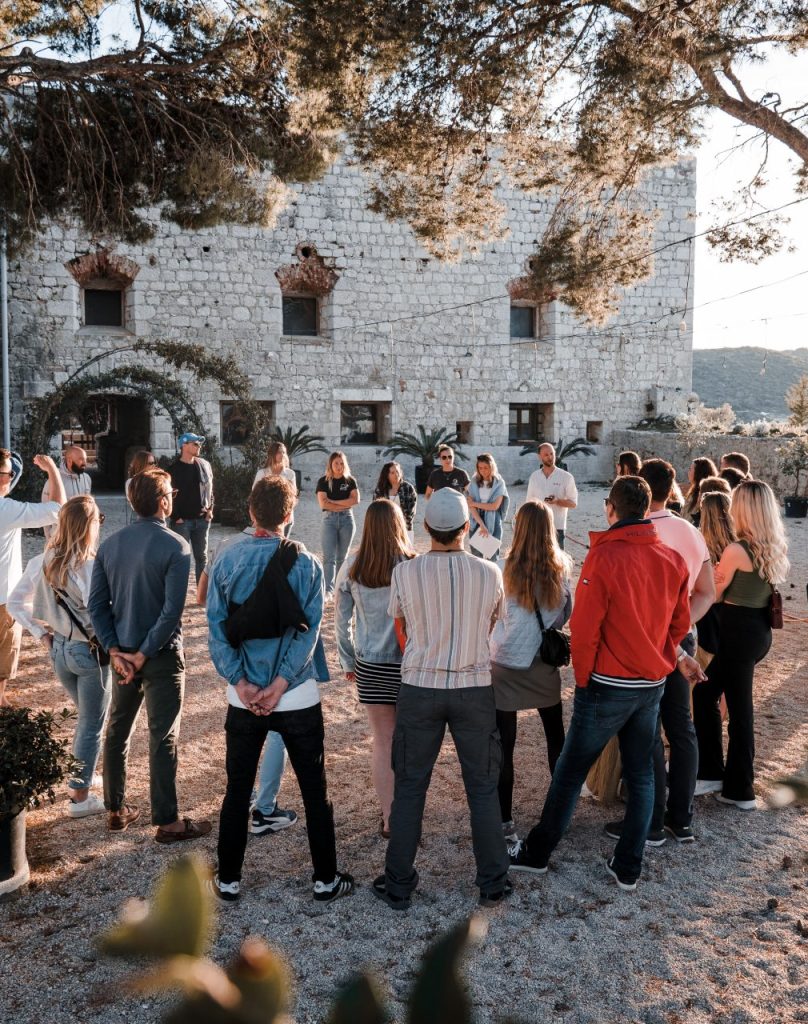
Fort George is the Mediterranean training environment. Training runs in a professional-grade kitchen inside the historic Fort George, set high above the Adriatic on Vis Island.
Vis is one of Croatia’s strongest food islands. Small farms, indigenous wines, day-boat seafood, and a fishing culture built around what came off the boat that morning. You cook with seasonal Adriatic produce throughout the week, in a kitchen designed for focused, high-output work.
The setting is calm, open, and deliberately removed from distractions, which is exactly what a high-intensity professional kitchen week needs. Expect long days, structured pressure, and the Adriatic always in view.
Fort George is the right pick for chefs who want a stable, land-based professional kitchen and full attention on technique, systems, and consistency. No sailing involved.
British Virgin Islands
The yacht-based edition is delivered onboard a working 50ft sailing yacht in one of the world’s most iconic charter sailing grounds. The British Virgin Islands sit in the heart of the Caribbean charter scene: warm trade winds, sheltered turquoise anchorages, and short hops between islands.
Training runs onboard with a small group of students, a skipper, and a chef instructor. Days follow the rhythm of a real charter week. Sail to the next anchorage, drop the hook, prep the meal, eat on deck as the sun goes down. The setup mirrors the operational realities of cooking and living onboard: limited space, shared responsibility, sailing motion, and constant coordination with the rest of the crew.
Accommodation is in shared cabins onboard the yacht. Meals are included throughout the week, with the exception of arrival and departure days. On all other days, lunch and dinner are covered as part of the onboard routine.
The yacht-based edition is the right pick for chefs who want the immersion of a working galley on a moving yacht. No prior sailing experience is required, but a basic comfort with being on a boat helps.
Who should apply
This is for you if:
- You have completed Host Academy and want to push beyond hosting
- You are working as a host and want to elevate your food, systems, and presentation
- You are a serious home chef ready for a high-intensity professional kitchen week
- You are aspiring toward restaurant or private-chef work and need real kitchen rhythm with strong fundamentals
- You are a career-changer committing fully to a culinary path
You do not need yacht ambitions to benefit from this course. The skills apply to any serious kitchen, professional or personal. What you do need is the readiness for a demanding week of long days, real service pressure, and constant feedback. The course rewards chefs already comfortable with the basics and ready to push into a professional gear.
Typical weekly format
Culinary Academy runs to the same standard format wherever we deliver it: yacht galleys, villa kitchens, and professional land-based kitchens. The principle does not change with the address.
Arrival and schedule
Arrival is on Saturday morning, which marks the mandatory check-in and the official start of the course. We strongly recommend arriving on Friday evening if you are travelling from far away or taking connecting flights; however, accommodation for Friday night is at your own expense.
From Saturday morning onwards, the course is fully residential. Accommodation is included from Saturday night through to Friday night (shared apartments near the kitchen at Fort George; shared cabins onboard the yachts for the BVI and Greece editions).
The course officially ends on Friday evening, and students typically depart on Saturday morning.
- Saturday 10.00. Course starts with a welcome briefing, provisioning, and the first cooking service.
- Saturday to Wednesday - Three full guest-style services per day (breakfast, lunch, and dinner) as the pacing builds.
- Thursday. Trial-day rehearsal.
- Friday 15:00. Course officially ends following a showcase brunch, final debrief, and certificates.
- Friday Evening. Optional Final night dinner on land (at own expense)..
- Saturday. Departure day.
How we evaluate applications
Culinary Academy is a high-intensity professional course. We accept applicants on two tracks, and we ask you to choose one when you apply.
- Career track: cooking professionally after the course. If you are using Culinary Academy as a step toward paid chef work, particularly with Quarterdeck or our partner network, we will only accept you if we believe you will graduate at a level we are willing to put you forward at. Career-track applicants need to demonstrate substantive professional kitchen experience, formal training, or equivalent documented competence at the application stage.
- Personal interest track: cooking better, not for work. If you are coming for the love of it (home cooking, dinner parties, deepening your craft) the documentation bar is lower. We do not require professional experience or formal training. The one constraint is cohort fit: every student in a given week needs to be roughly aligned on skill level so the instructor can teach effectively. A course where the skill range is too wide cannot be taught well, so an application that sits well outside the band of a given week may be deferred to a different week or declined.
- A note on grouping: We run Culinary Academy multiple times each season. When two weeks run in parallel, we group students by experience tier so each cohort is internally aligned. Where parallel weeks are not running, the same alignment principle applies within a single cohort.
Next steps
Ready to Join Culinary Academy?
Career-track Culinary Academy graduates are almost always placed. We have run 6,500+ host and chef assignments across yachts, private villas, and chalets worldwide over twenty years, and we prioritise our own graduates because we have already seen what you can deliver under real service pressure. Placement is the rule, not the exception.
Submit your application and we will send course dates, pricing, and practical details to help you prepare. Spots are limited and filled in the order applications come in.
Not sure yet?
Culinary Academy is the advanced tier and intentionally demanding. Most students arrive having already done Host Academy, run their own kitchen, or worked a season in service. We are selective on intake because we are selective on what we put forward to clients afterwards. If we accept you, we will back you.
If you are weighing it up, write to us with a few lines about your background and we will tell you honestly whether this is the right fit, the right week, or whether Host Academy is a better starting point.