

Yacht Host and Chef Jobs: What Onboard Hospitality Work Actually Involves
Onboard hospitality roles are some of the most in-demand positions in the sailing and charter industry. Whether you’re an experienced hospitality professional looking to take your skills onto the water, or you’re exploring yacht and flotilla work for the first time, this page covers what the roles actually involve, what employers are looking for, what you can realistically earn, and how to get started.

What is a Yacht Host or Chef?
A yacht host manages the guest experience onboard: meals, drinks, cabin preparation, and guest care. A yacht chef handles all food onboard, from menu planning and provisioning to cooking in a compact galley. On most sailing charter yachts, one host covers both roles in a single hybrid position.
Why the hybrid role? It comes down to yacht size and layout. On sailing and power yachts under roughly 50ft, there is only room for a small crew, so one host combines the duties a larger yacht would split between a steward(ess) and a chef. From around 20 metres upward, there is space for more crew, and operations start hiring a dedicated chef and a separate steward(ess).
Charter type matters too. Charter yachts are optimised for maximum guest capacity, which leaves less room for crew, so the host role dominates. Private yachts carry fewer guests and often add a separate chef or steward(ess) at smaller sizes than charter operations do.
What Is a Flotilla?
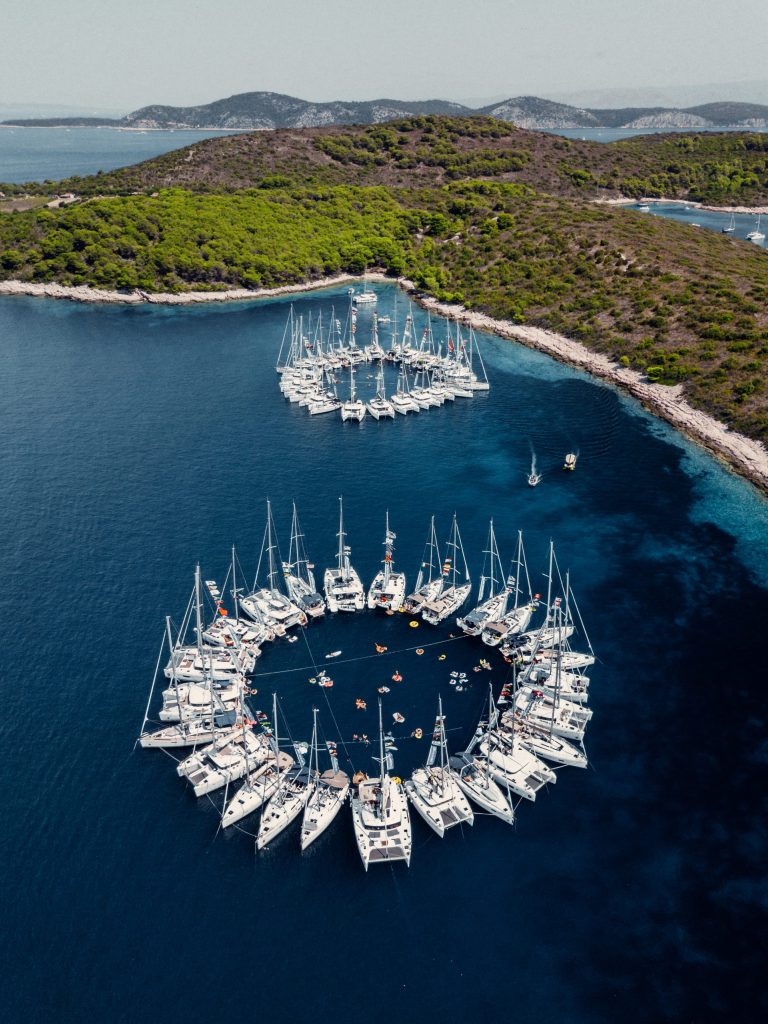
A flotilla is a group of yachts sailing together on a shared route, often organised as a sailing event. Flotilla hosts work across the whole fleet rather than on a single yacht, running briefings, group events, and guest support throughout the week.
What Does a Yacht Host Actually Do?
The yacht host role is guest-facing from the moment guests step onboard to the moment they leave. The job is less about formal service and more about making a charter week run smoothly for everyone on it.
Day-to-day responsibilities typically include:
- Preparing cabins and communal areas before guest arrival
- Managing drinks, snacks, and refreshments throughout the day
- Preparing and serving breakfast and light lunches onboard
- Communicating with guests about plans, stops, and preferences
- Coordinating provisioning before and during the charter week
- Supporting the skipper with onboard logistics and guest needs
- Maintaining the atmosphere onboard during longer sailing days
In flotilla environments, hosts often also run welcome briefings, organise group dinners ashore, and act as the social anchor for the fleet across the week.
The role suits people who are naturally organised, calm under pressure, and genuinely enjoy looking after others in close-quarters environments.
Got the qualifications but lack experience? Start with Galley Academy, then move into Host Academy.
What Does a Yacht Chef Actually Do?
A yacht chef is responsible for all food onboard, across every meal of the charter week. The galley is small, the group is hungry, and dietary preferences vary. The job requires genuine cooking ability combined with strong organisational skills.
Core responsibilities include:
Planning menus before departure based on guest preferences and dietary requirements
Completing provisioning at the base marina before the charter begins
Preparing breakfast daily, often as a buffet-style spread
Cooking light lunches between swim stops or sailing legs
Managing dinners onboard when guests are not eating ashore
Maintaining galley hygiene and food safety standards throughout the week
Coordinating with the host or skipper on timing and guest expectations
Cooking onboard is different from cooking in a restaurant. Space is limited, storage is constrained, and the boat is sometimes moving. The ability to prepare high-quality food efficiently and without fuss is what separates good yacht chefs from great ones.
Want to elevate your cooking and open up higher-end placements? Explore Culinary Academy.
Flotilla Host and Social Crew Roles
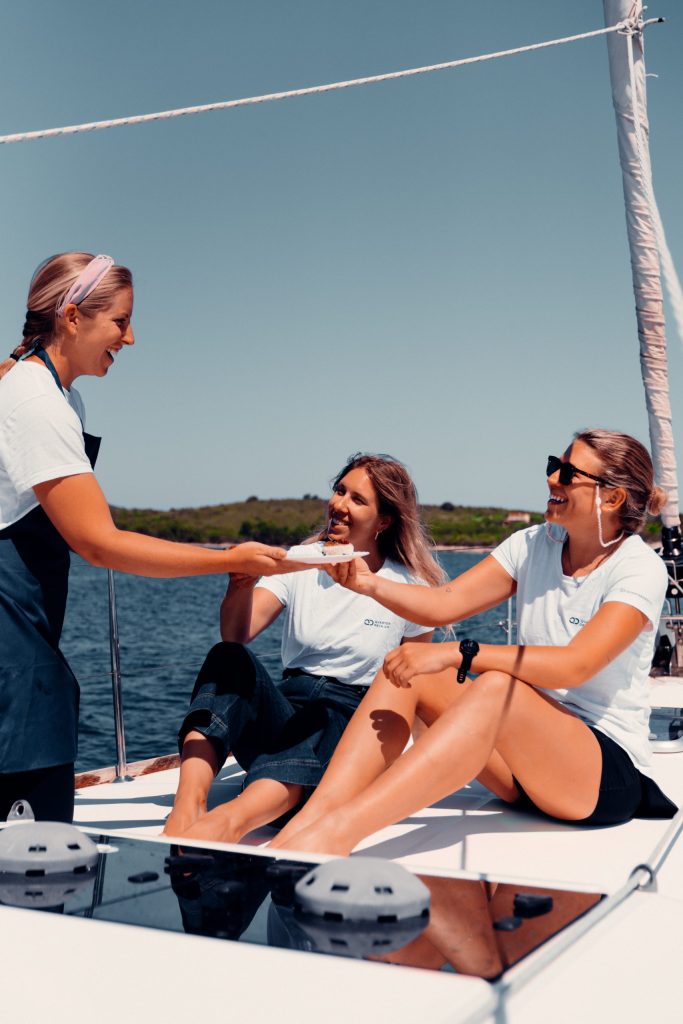
Flotilla work sits slightly differently from single-yacht charter hosting. Rather than working on one yacht with one group of guests, flotilla hosts work across a fleet, supporting multiple yachts and their crews throughout the week.
The role typically involves:
- Welcoming arriving guests at the base marina
- Running fleet briefings and daily route updates
- Organising group events, beach parties, and dinner ashore
- Acting as a first point of contact for guest questions and issues
- Supporting individuals boats with logistics and local knowledge
- Keeping energy and atmosphere positive across the fleet
Flotilla hosting is social, high-energy, and logistically demanding. It suits people who can manage many things at once and are comfortable being the face of the operation for a large group.
Host vs Chef vs Stewardess: What Is the Difference?
A yacht host combines light meal preparation, drinks service, provisioning, and guest care in one role. A yacht chef focuses solely on food. A stewardess focuses on interior service on larger yachts. On yachts under roughly 20 metres, the host covers what a chef and stewardess would do separately.
The split follows yacht size and crew space. Charter yachts in the 40–60ft range are optimised for guest capacity, leaving room for a skipper and one host. Once a yacht passes roughly 20 metres, crew quarters allow for a dedicated chef and a separate steward(ess), which is the standard setup on larger charter and superyacht operations.
A stewardess role focuses on interior service, cabin turndown, formal table service, and laundry. It is most common on larger superyachts and less common in the sailing charter and flotilla sector.
For most sailing charter and flotilla operations, the host role is the standard entry point into onboard hospitality.

What Skills Do Employers Look For?
Yacht and flotilla employers are looking for people who can deliver consistent, warm, professional service in a demanding environment. Technical skills matter, but so does character.
Practical Skills
Hospitality or customer service experience
Cooking ability, particularly for breakfast and light lunch preparation
Provisioning and stock management
Organisation in limited spaces
Basic knowledge of food hygiene and safety
Personal Qualities
- Adaptability and calm under pressure
- Genuine enjoyment of working with people
- Professionalism in guest-facing situations
- Teamwork, particularly in working closely with skippers
- Resilience during long charter days and back-to-back weeks
Sailing experience is helpful but is not always a requirement for host roles. Most charter yachts operate with a qualified skipper; the host’s job is the hospitality side, not the sailing side.
Personality and professionalism carry significant weight in crew hiring. Operators are placing people in close-quarters environments with paying guests for a full week. Reliability, warmth, and good judgement matter as much as a CV.

What Are the Working Conditions?
Onboard hospitality work is rewarding, but it is also physically and mentally demanding. Understanding the conditions before applying helps you make the right decision.
Typical working conditions include:
- Long days during active charter weeks, often starting early and finishing late
- Shared crew accommodation onboard or at the base
- Seasonal contracts that follow each region's booking patterns, with the most work during peak booking months
- Back-to-back weekly turnarounds with limited rest between charters
- Close working relationships with skippers and other crew in small team environments
- Guest-facing pressure throughout the week, including managing complaints and changing plans
The seasonal nature of yacht and flotilla work means many crew members combine Mediterranean summers with Caribbean or BVI winters, extending their earning season across the year.
What Can You Earn?
How to Get Started

If You Have Hospitality Experience But No Yacht Background
Host Academy is the most direct route into paid yacht and flotilla work. It covers provisioning, onboard guest service, galley operations, and the practical standards expected in charter environments.
Got the qualifications but need more professional experience? Host Academy is the next step.
Launch Your Career on a Flotilla
Whether you are brand new to the industry or looking to take your hospitality skills to the sea, the Quarterdeck Host Academy is your gateway to flotilla life. We are the trusted training and recruitment partner for premier flotilla operations worldwide. Through our structured academy, you will gain the exact skills needed to secure placements across Croatia, Greece, and the Mediterranean’s top destinations.


If You Need to Build Your Cooking Foundation First
Galley Academy is an entry-level cooking course covering knife skills, mise en place, basic stocks and sauces, hygiene, and galley management. It feeds directly into Host Academy the following week.
Start with Galley Academy, then progress into Host Academy.

If You Want to Access Higher-End Charter Placements
Culinary Academy is designed for people who already have onboard experience and want to elevate their cooking to open up premium charter opportunities with private and high-end clients.
Quality. Delivered. Together
If You're Ready to Work
Already trained and experienced? Register your profile and get listed on the Quarterdeck staff marketplace to be matched with charter operators looking for crew.
Got the qualifications and experience? Register your profile and get listed on the Quarterdeck staff marketplace.
Where Do Yacht Hosts and Chefs Work?
Most sailing charter and flotilla work is concentrated in a small number of regions during the summer season.
Mediterranean
Croatia (Split, Dubrovnik, Trogir, Šibenik), Greece (Athens, Lefkada, Corfu, Kos), and other Adriatic and Aegean destinations make up the majority of summer charter operations. The season runs April to October, with peak demand for hosts and chefs from June to August.
Caribbean and BVI
The British Virgin Islands and wider Caribbean season starts around November and runs to around July. Peak booking months are December to April, though this varies year to year.
Indian Ocean
Thailand (Phuket) runs November to April, peaking December to March. The Maldives peaks December to March during the dry northeast monsoon. The Seychelles sails year-round with the best conditions April to October. Mauritius runs May to November, outside the January to March cyclone period.
Pacific and Americas
French Polynesia (Tahiti, Bora Bora) peaks during the May to October dry season. Mexico’s Sea of Cortez runs November to May, peaking December to April.
Because the regions peak at different times of year, experienced hosts and chefs can chain seasons together, for example, a Mediterranean summer followed by a Caribbean or Thailand winter, and work most of the year.
Related Pages
- Become a Skipper and Skipper Academy for those pursuing the professional skipper track
- Sailing Academy for people who want to learn to handle a 40–50ft yacht, whether as preparation for Skipper Academy or for private sailing
- Host Academy for job-ready yacht host training
- Galley Academy for entry-level cooking foundations before Host Academy
- Culinary Academy for experienced hosts and chefs looking to access higher-end placements
FAQ
Do I need sailing experience to work as a yacht host?
Not necessarily. Sailing experience is not usually required for host roles. Most charter yachts operate with a qualified skipper responsible for sailing the boat. Hosts are hired for their hospitality skills. Basic sea legs and comfort on the water are helpful.
Is yacht host work suitable for beginners?
Yes, with the right preparation. Galley Academy and Host Academy are both designed to take people from little or no experience through to a job-ready placement standard.
How much does a yacht host earn?
Yacht hosts typically earn €600 to €1,600 per week, with accommodation and food included during charter weeks. Flotilla and group events sit at the lower end, charter company placements in the middle, and private charters at the top. Tips can add meaningfully to weekly earnings.
How long is a typical contract?
Contract length follows each region's booking season. In the Mediterranean, work runs April to October with peak demand June to August. In the Caribbean, the season runs roughly November to July, with peak bookings December to April. Many crews chain a Mediterranean summer with a winter season elsewhere.
Can you work year-round as a yacht host or chef?
Yes. Charter seasons around the world overlap: the Mediterranean peaks June to August, the Caribbean and Thailand peak December to April, and destinations like the Seychelles sail year-round. Experienced hosts and chefs move between regions to extend their earning season to most of the year.
Is accommodation included?
During active charter weeks, onboard accommodation is generally included. Accommodation between charters depends on the operator and contract structure.
What is the difference between a yacht host and a flotilla host?
A yacht host works on a single yacht with one group of guests per week. A flotilla host works across a fleet of yachts sailing together, supporting multiple crews and running group events and briefings throughout the week.