

Deckhand Jobs: Yacht and Boat Deckhand Careers Explained
Deckhand jobs are the most common entry point into the yacht and superyacht industry. A deckhand works on the exterior of a vessel, handling lines, maintaining the deck, supporting docking operations, operating tenders, and keeping the yacht in the condition guests and owners expect. The role is physical, team-based, and practical.
It is also a genuine career pathway. Most captains, bosuns and deck officers working in the yacht industry today started as deckhands. The progression is structured and achievable: sea time, certifications and references are what move you forward, not years at a desk.
This page covers what deckhand jobs actually involve, what qualifications are required, what the work is really like, what you can earn, and how to get started.
What Does a Deckhand Do?
A deckhand is responsible for exterior maintenance, deck operations and guest support aboard a yacht. The scope varies with vessel size: on a 40-60ft charter sailing yacht, the deckhand role is often combined with other crew functions. On a large superyacht, the deckhand is one of several exterior crew working under a bosun or chief officer.
Day-to-day responsibilities typically include:
- Washing, polishing and maintaining the exterior of the vessel to a high standard
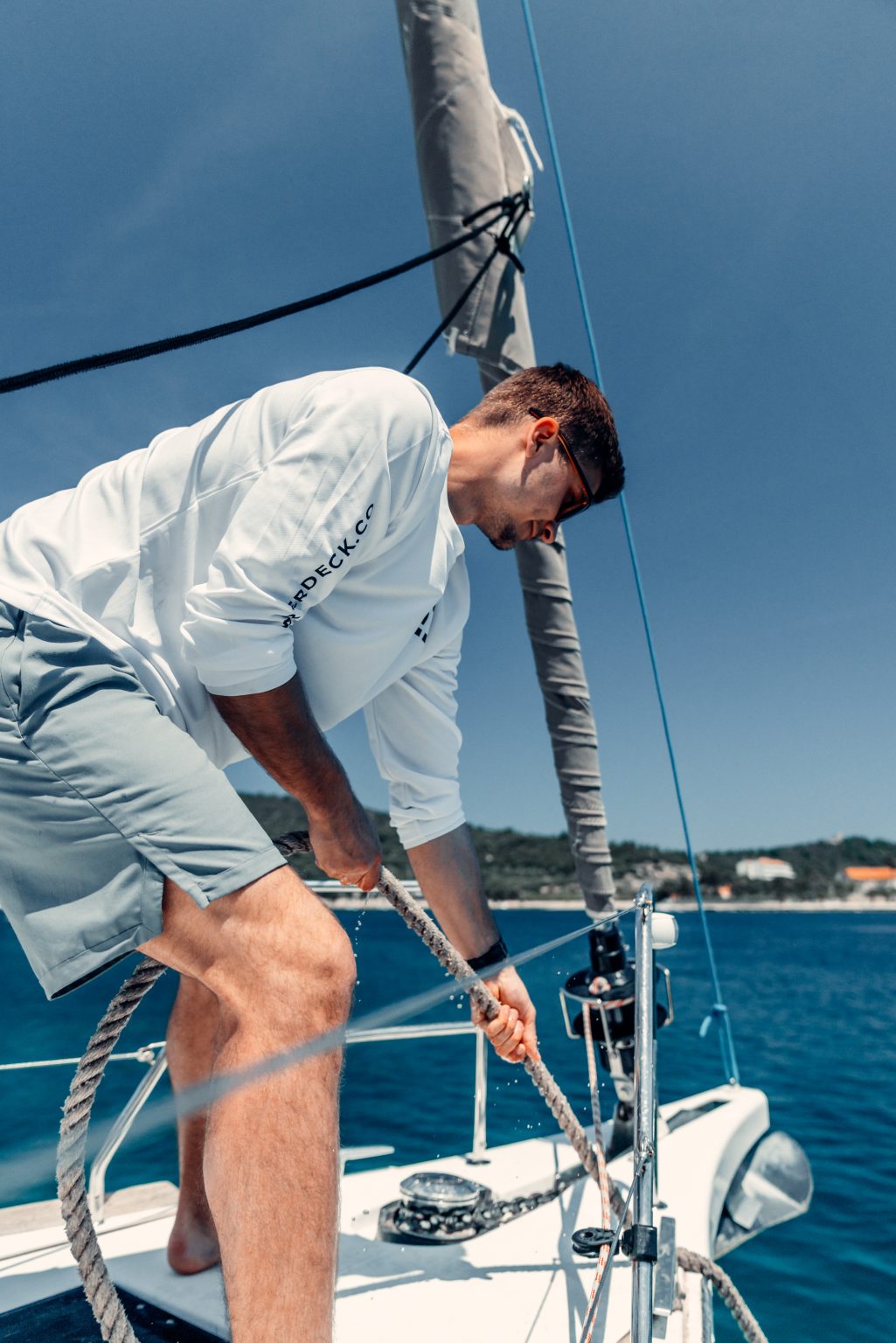
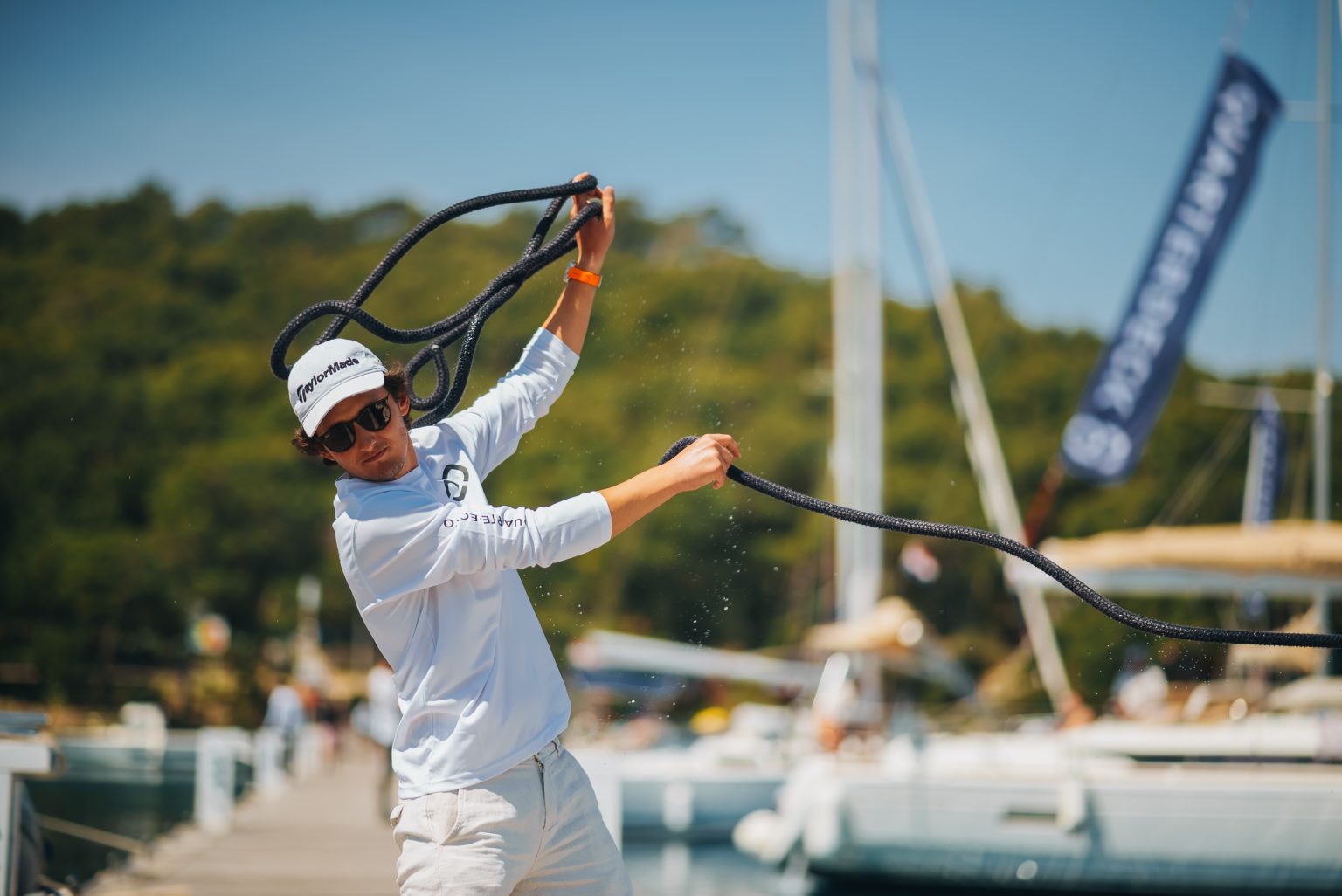
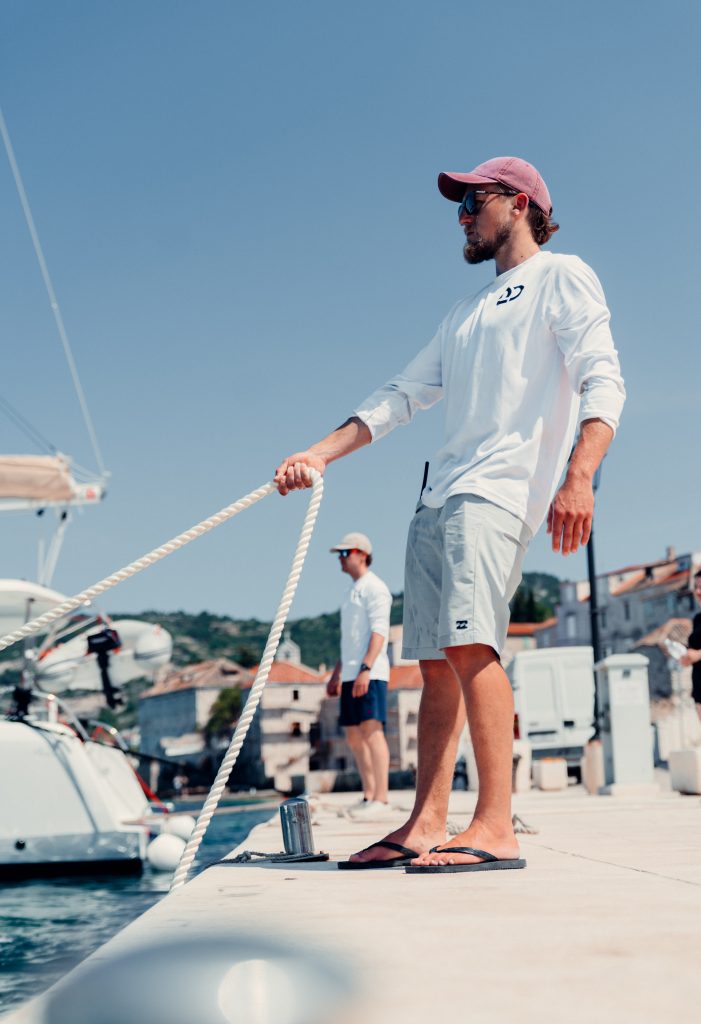
- Handling lines during docking, departure and mooring operations
- Deploying and managing fenders correctly during marina approaches
- Anchor handling and windlass operation
- Launching, driving and recovering the tender
- Assisting with water sports equipment (jet skis, paddleboards, towable inflatables)
- Setting up and packing away deck furniture, shade structures and sun awnings
- Watch-keeping during passages under skipper or officer supervision
- Assisting with safety briefings and emergency drills
- Carrying out general deck maintenance: varnishing, painting, teak care and hardware upkeep
- Preparing the yacht for guest arrival and post-charter turnaround
On smaller charter yachts, deckhands may also assist the skipper with navigation and sail handling. On larger superyachts, the role is more departmentalised and focused on exterior operations and guest-facing deck service.
What Types of Deckhand Jobs Are There?
Charter Yacht Deckhand Jobs
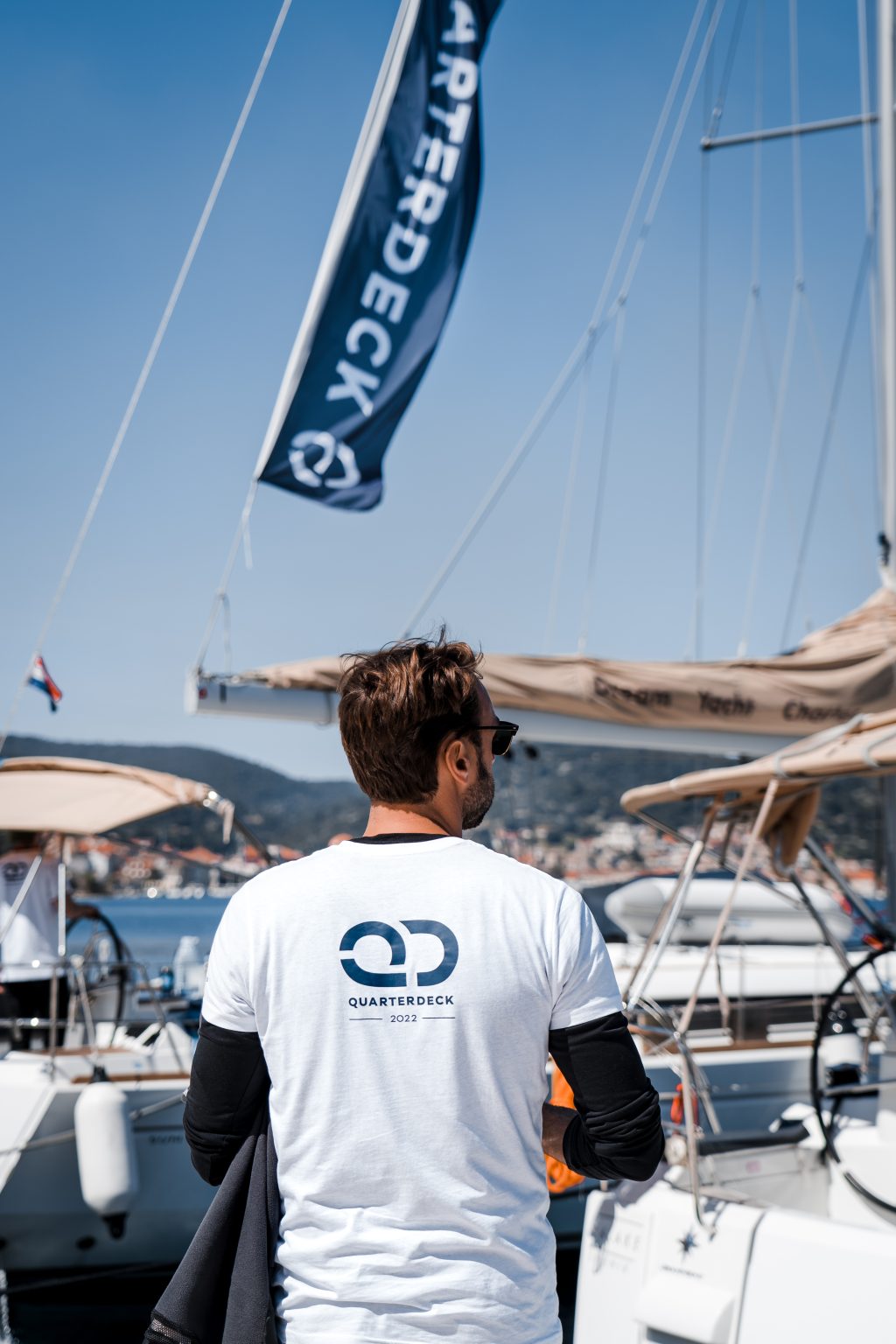
Deckhand roles on 40-80ft charter sailing and motor yachts are the most common in the Mediterranean and Caribbean. These are often seasonal contracts tied to the charter schedule, with deckhands supporting the skipper and host across each charter week. The work is hands-on and fast-paced during the season.
Superyacht Deckhand Jobs
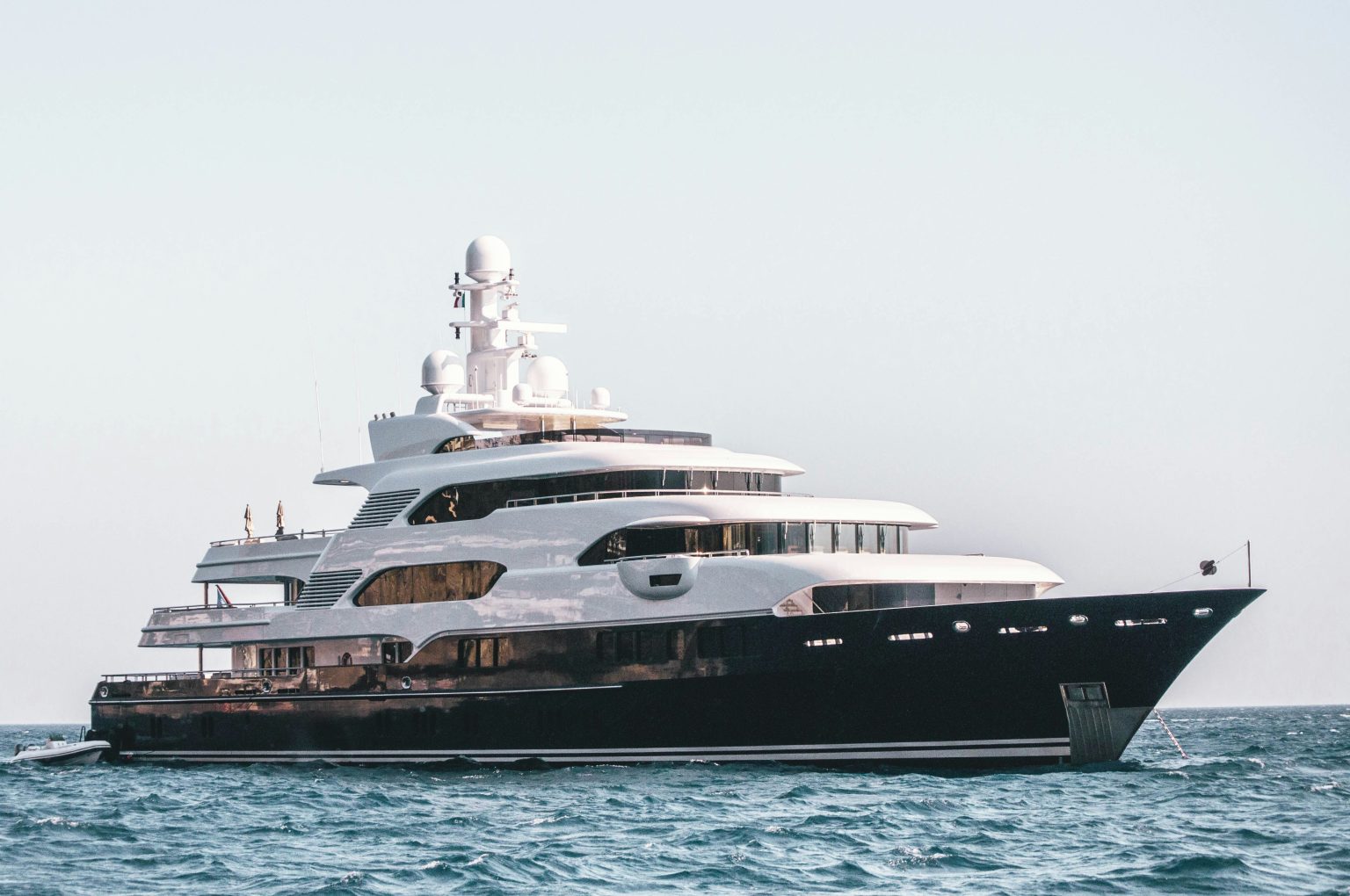
The largest sector of the market. Superyacht deckhands work as part of a structured deck department on vessels typically 24m and above. The role is more formal and departmentalised than on smaller yachts, with clear lines of responsibility and regular inspection of work by a bosun or chief officer. Superyacht deckhand positions are often live-aboard roles on rotational contracts.
Day Work
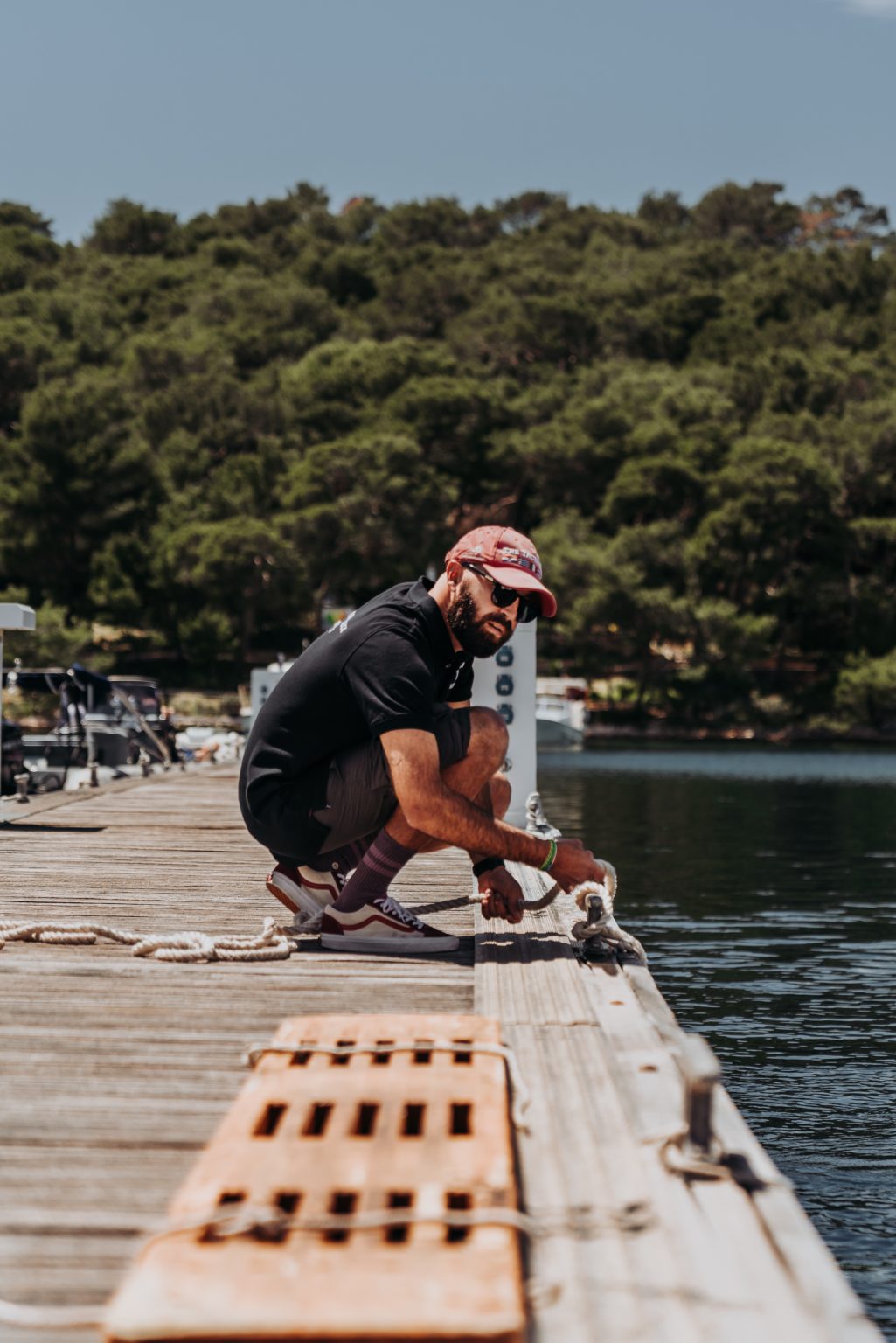
Day working is one of the most effective ways to break into deckhand work. Day workers are hired on a daily basis, typically for turnaround days, maintenance work or as additional crew during busy periods. Day workers typically earn €100 to €120 per day and the work is a direct route to permanent crew positions: most captains and bosuns will consider a day worker who has impressed them before hiring from applications.
Bosun and Lead Deckhand Roles
After one to two seasons as a junior deckhand, experienced crew typically progress to lead deckhand or bosun. The bosun is the senior non-officer crew member responsible for managing the deck team, planning and overseeing exterior maintenance, and acting as the direct supervisor of junior deckhands. This is the first step toward the deck officer track.
Freelance and Seasonal Deckhand Jobs
Many deckhands work on a seasonal basis, following the charter fleet. The Mediterranean season runs May through October; the Caribbean season runs November through April. Experienced deckhands chain both seasons and work most of the year. Freelance arrangements are less common but exist among experienced crew with strong networks.
What Deckhand Work Is Really Like
Physical Demands
Deckhand work is genuinely physical. Washing and polishing a large yacht exterior takes hours. Lines are heavy and handling them under load requires strength and correct technique. Working days during charter season regularly run 10 to 14 hours. Lifting equipment, carrying provisioning, shifting deck furniture in summer heat: this is manual work done to a high standard, consistently, across a full season.
Physical fitness is not a nice-to-have. You need to be able to sustain physical output across long days and back-to-back weeks. Swimming ability is mandatory: some operators specify a minimum swimming standard, and being in the water for maintenance, anchor checks or emergencies is part of the role.
Working Hours and Seasonality
During charter weeks, there is no clear boundary between on and off duty. Guests are onboard, the yacht is operational, and the deck must be maintained continuously. Early starts for anchor watches, late finishes after dinner service, and full turnaround days between charters are all standard. Changeover days are the most demanding: the entire exterior must be clean, teak scrubbed, and the yacht presented to specification before the next group boards.
Between charters, the pace drops. Maintenance, repairs and preparation work continue but the pressure eases. Most seasonal contracts include one to two days off per week.
Team Environment
Deckhands work as part of a small, close-knit crew living and working in a shared environment. The ability to work well within a team, take direction from senior crew, support colleagues without being asked and maintain a positive attitude in a confined space is as important as technical competence. The crews that work well are ones where everyone pulls their weight, regardless of role.
Accommodation
Superyacht and charter yacht deckhand roles include accommodation onboard in crew cabins. Living aboard is part of the job. Cabins are small and shared on most vessels. Meals are provided. The arrangement substantially reduces living costs during the season.
Qualifications for Deckhand Jobs

STCW Basic Safety Training
STCW (Standards of Training, Certification and Watchkeeping) Basic Safety Training is mandatory for all crew working commercially on a yacht. Without it, you cannot legally work on a commercial vessel. The course covers personal survival techniques, fire prevention and firefighting, basic first aid, and personal safety. It typically takes four to five days and must be renewed every five years.

ENG1 Medical Certificate
The ENG1 medical certificate confirms you are fit for sea service. It is required for all commercial yacht crew and must be renewed every two years. The examination is carried out by an approved maritime medical examiner.
Powerboat Level 2 or Equivalent Tender Driving Qualification
Most deckhand roles involve operating the tender, and operators expect crew to hold a recognised powerboat qualification before they are asked to drive guests. The RYA Powerboat Level 2 is the standard in Europe and is widely recognised in the Mediterranean and Caribbean. The equivalent in the US is an NASBLA-recognised boating safety certificate.

VHF Radio Operator's Licence (SRC)
A Short Range Certificate (SRC) is expected by most operators and is required to operate marine VHF radio. The course is typically one day and the examination is straightforward.
Additional Qualifications That Help
- RYA Day Skipper or equivalent sailing qualification (demonstrates foundational seamanship)
- STCW Proficiency in Survival Craft and Rescue Boats (required for career progression to bosun)
- Tenders and Small Craft course (Superyacht UK)
- Divemaster or PADI certification (highly valued on yachts with diving guests)
- Jet ski or personal watercraft licence (required in some jurisdictions)
- First aid certificate beyond STCW basic level

None of these are required to get a first deckhand job, but each one adds genuine value to an application and accelerates career progression.
Is Experience Required?
No prior yachting experience is required for entry-level deckhand positions. What operators look for at entry level is physical fitness, a professional attitude, STCW certification, and evidence that a candidate will work hard and take direction. Previous experience in outdoor, physical or team-based work (construction, military, professional sport, hospitality) is often mentioned positively in applications.
The Career Progression Path
The deckhand career track is one of the clearest in the yachting industry. Progression is driven by sea time, certifications and references: three things you accumulate by doing the job well.
The typical progression runs:
Junior Deckhand (first season): Learning the role, building sea time, working under close supervision.
Senior/Lead Deckhand (second season onward): Demonstrated competence, taking more responsibility, earning a strong reference.
Bosun (2 to 4 seasons): Managing the deck team, overseeing exterior maintenance, acting as the link between deck crew and officers.
Deck Officer Track (Yachtmaster, OOW): Requires formal maritime certification beyond STCW. Those who pursue the officer route take on navigation, watch-keeping and command responsibilities.
The progression from deckhand to bosun typically takes two to four active seasons. The move from bosun to deck officer requires formal certification, most commonly RYA Yachtmaster Offshore and, for larger commercial vessels, MCA Officer of the Watch.
What Deckhands Earn
Salary figures for deckhand roles reflect vessel size, experience, and whether the yacht is charter or private.
Entry-level deckhand salaries across the industry range from approximately €2,000 to €3,800 per month, with accommodation, meals and travel included. Charter yachts additionally generate tip income shared across the crew, which can add significantly to earnings during busy seasons.
The Mediterranean market pays well. Entry-level deckhands in the Mediterranean typically earn €2,500 to €2,800 per month tax-free.
On charter yachts, tips are standard and can be substantial during peak season. On private yachts, base salaries are typically comparable but tip income is not a factor. The trade-off is a more predictable schedule and sometimes stronger opportunities for skill development during quieter periods.
All yacht crew on live-aboard contracts have zero accommodation and food costs. This substantially increases the effective value of the monthly salary compared to a land-based role paying a similar figure.
Deckhand vs Skipper vs Captain vs Bosun: What Is the Difference?
These titles often cause confusion for people outside the industry.
A deckhand is an entry to mid-level exterior crew members responsible for maintenance, line handling and deck operations. It is the starting point for most yachting careers.
A bosun is the senior deckhand, responsible for managing the deck team and overseeing all exterior maintenance and operations. On smaller yachts the bosun may also act as first officer. It is not a command position.
A skipper or captain is in command of the vessel. They are responsible for navigation, guest safety, the overall management of the charter, and the performance of the crew. These are leadership roles requiring formal qualifications and significant sea time.
A yacht mechanic or marine engineer focuses on propulsion, mechanical and electrical systems. This is a parallel technical track, not part of the deck department.
Most captains started as deckhands. The deckhand role is specifically mentioned because understanding where it sits in the crew hierarchy helps candidates understand both what the job is and where it can lead.
Where Deckhand Jobs Are Found
Most deckhand work concentrates in a small number of regions.
Mediterranean: The Cote d’Azur (Antibes, Monaco, Cannes), the Italian Riviera, the Balearics (Palma de Mallorca), Croatia (Split, Dubrovnik) and Greece (Athens, Corfu, the Ionian) are the main hubs. Antibes and Palma are the two most active crew recruitment markets in Europe. The season runs May through October.
Caribbean: Fort Lauderdale is the principal crew recruitment hub for the Caribbean market. The season runs November through April. The BVI, St Maarten, Antigua and the Grenadines are the main operating areas.
Worldwide: Large superyachts travel globally. Deckhands on permanent crew positions travel with the vessel.
Day work: Showing up at a busy marina and offering day work directly to yachts is a genuinely effective method of securing a first role. The key hubs are Antibes, Palma, Fort Lauderdale and Viareggio.
Staff marketplaces: Operators and crew managers use platforms and marketplaces to search for available crew. Registering a profile on the Quarterdeck staff marketplace puts you in front of charter operators and fleet managers looking for deck crew across the Mediterranean and beyond.
How to Get Started
If You Have Drive But Lack Sailing Experience
Sailing Academy is the most structured way to build foundational seamanship before applying for deckhand positions. The course runs on sailing yachts but covers the boat handling, line work, docking, anchoring and sailing fundamentals that directly apply on both sailing and power yachts. Completing Sailing Academy gives you real time on the water, a recognised course completion, and a reference from an instructor who has seen you work.
Sailing Academy is the place to start. Training takes place on sailing yachts and is applicable to both sailing and power yacht deckhand roles.
If You Have Sailing Experience But Need Professional Charter Credentials
Skipper Academy is designed for candidates who can sail but want to develop toward professional charter and deck leadership roles. The course covers real charter scenarios, professional crew conduct, flotilla operations and assessment against professional standards. It is the direct pathway toward working as a professional skipper, but the skills and credentials it builds are equally relevant for candidates targeting senior deckhand and bosun positions.
Skipper Academy builds the professional charter credentials relevant for both skippering and senior deck roles. Training takes place on sailing yachts and is applicable across sailing and power vessels.
Interested in Yacht Week?
Quarterdeck works closely with Yacht Week operations across Croatia, Greece and other Mediterranean destinations. It is worth noting that Quarterdeck does not currently place deckhands directly into Yacht Week operations: the crew positions within Yacht Week focus primarily on skippers and hosts. If your interest in Yacht Week is more broadly about working in Mediterranean charter operations, Sailing Academy and Skipper Academy are the routes into those networks, with skippering being the role that connects most directly to Yacht Week employment.
Interested in working within Yacht Week operations? Sailing Academy and Skipper Academy are the relevant starting points.
If You Are Already Qualified and Experienced
If you hold STCW, ENG1 and relevant experience, registering your profile on the Quarterdeck staff marketplace is the most practical next step. Once verified, your profile is visible to charter operators and fleet managers looking for deck crew across the Mediterranean and beyond.
Got the qualifications and experience? Register your profile and get listed on the Quarterdeck staff marketplace.
Related Pages
- Captain Jobs for those pursuing the professional skipper track
- Yacht Mechanic Jobs for those with a mechanical background
- Skipper Academy for professional charter skipper training
- Sailing Academy for foundational sailing and seamanship
- Browse Available Crew to register your profile or search for available crew
FAQ
How do you become a yacht deckhand?
The core requirements for commercial deckhand work are STCW Basic Safety Training and an ENG1 medical certificate. Beyond these, building foundational seamanship through a course such as Sailing Academy, then approaching marinas for day work or seasonal contracts, is the most direct route. Prior yachting experience is not required for entry-level positions.
How much deckhands earn?
Entry-level deckhands in the Mediterranean typically earn €2,000 to €2,800 per month, with accommodation, meals and travel included. Charter yachts add tip income on top of the base salary. After one to two seasons, senior deckhands and bosuns earn €3,500 to €5,500 per month. All figures are typically tax-free for crew on foreign-flagged vessels in international waters.
Can deckhand work lead to a career as a captain?
Yes. The standard progression runs from deckhand through bosun and lead deckhand, then into the deck officer track (Yachtmaster, OOW) and ultimately to captain. The progression is driven by sea time, certifications and references rather than years of service. The fastest route up is to work hard, collect a strong reference from every boat you are on, and pursue certifications alongside your sea time.
Where are most deckhand jobs located?
The main recruitment hubs are Antibes and Palma de Mallorca in Europe, and Fort Lauderdale for the Caribbean market. The Mediterranean season runs May through October; the Caribbean season runs November through April. Many deckhands work both seasons and are employed for most of the year.