

Yacht Electrician Jobs:
Marine Electrical Careers Explained
Yacht electrician jobs cover a range of roles across the marine industry, from freelance technicians working across charter fleets in the Mediterranean to full-time Electro-Technical Officers (ETOs) maintaining the systems of large superyachts on permanent contracts. The common thread is marine electrical expertise: the ability to diagnose, repair and maintain the electrical and electronic systems that keep vessels safe and operational.
This page covers what yacht electricians and marine ETOs actually do, what systems they work on, what qualifications are required, what the work is really like, and how to get into a marine electrical career.
Yacht Electrician vs. ETO: Understanding the Distinction
Before going further, it is worth being precise about terminology because the industry uses several related titles that mean different things in practice.

Yacht Electrician
A yacht electrician works primarily on the physical electrical systems of a vessel: wiring, DC and AC circuits, battery banks, charging systems, lighting, generators and basic navigation electronics. On smaller charter yachts and flotillas (typically 40-60ft), this is often a freelance or marina-based role, carried out by a technician who works across multiple vessels rather than living aboard one.
Electro-Technical Officer (ETO)
An Electro-Technical Officer (ETO) is a formal maritime rank found primarily on larger superyachts (typically 24m and above). An ETO is a permanent, live-aboard crew member responsible for all electrical, electronic and automated systems on the yacht: power generation and distribution, navigation and bridge electronics, AV and IT systems, communications, automation, and safety systems. The role requires STCW certification and sits within the engineering department.
A marine engineer has broader responsibility than either of the above, covering propulsion, mechanical systems, hydraulics and hull engineering in addition to electrical systems. On larger vessels, the marine engineer and the ETO are separate roles. On smaller yachts, one person may cover both.
The distinction matters because the qualifications, pay, lifestyle and day-to-day work are meaningfully different across these roles. This page covers all three, clearly.
What Does a Yacht Electrician Do?
A yacht electrician diagnoses, installs, maintains and repairs the electrical systems of marine vessels. On smaller charter yachts, this is often project or call-out work carried out at a marina or boatyard. On larger vessels, it may be a contracted role as part of a refit or technical support team.
Day-to-day work typically includes:
- Diagnosing faults in DC and AC electrical circuits
- Installing and replacing wiring, fuse boards, circuit breakers and switches
- Maintaining and testing battery banks (including lithium systems on newer vessels)
- Servicing generators and shore power connections
- Installing and commissioning marine lighting systems
- Troubleshooting charging system failures (alternators, solar, wind, shore power)
- Maintaining navigation electronics (chartplotters, VHF, AIS, radar)
- Installing and commissioning new electrical equipment
- Completing electrical surveys for insurance or sale purposes
- Working with shorepower systems, inverters and battery management systems
The environment varies considerably. Some yacht electricians work primarily in marinas and boatyards, moving between vessels. Others work on superyacht refits in shipyards, spending weeks or months on a single superyacht. Some take seasonal contracts with charter fleets to provide technical support across a fleet throughout the Mediterranean or Caribbean season.
What Does an ETO Do on a Superyacht?
The Electro-Technical Officer role on a superyacht is considerably broader than a standard electrical technician position. An ETO is responsible for managing and maintaining all of a yacht’s electrical and electronic systems, including AV and IT systems (audio, video, satellite communications, WiFi), navigation and bridge electronics, power generation and distribution, lighting, HVAC, galley and automation systems, battery banks, UPS and energy storage, and control systems for propulsion and stabilisers.
On larger yachts, the ETO also manages
Cybersecurity and network administration
Integrated bridge management systems
Guest-facing entertainment and cabin control systems
Planned maintenance schedules and coordination with shore-side technicians
Safety system compliance (fire detection, emergency communications, access control)
ETOs ensure that maintenance schedules are planned and closely followed to troubleshoot problems with equipment and systems, diagnose faults and repair where necessary, assist the Chief Engineer with tasks as delegated, and coordinate with technicians onshore when needed.
The ETO role has evolved significantly as yachts have become more technologically advanced. The demand for qualified ETOs has surged, driven by the integration of advanced automation systems, cybersecurity requirements, and increasingly complex onboard networks.
Common Systems Yacht Electricians Work On
Understanding the systems involved gives a clearer picture of the technical depth the role requires.
DC Electrical Systems
Most sailing yachts and smaller motor yachts run on 12V or 24V DC systems for core functions: lighting, navigation instruments, bilge pumps, VHF radio and autopilot. DC system work involves battery bank maintenance, charging management (solar, wind, alternator, shore power), fuse and breaker panels, and wiring integrity.
AC Electrical Systems
Larger yachts carry 240V (or 120V in US markets) AC systems, typically powered by generators or shore power via an inverter/charger system. AC work covers generator installation and servicing, shore power connections, inverter systems and load management.
Battery Systems
Battery technology on yachts has shifted significantly toward lithium iron phosphate (LiFePO4) systems on new builds and refits. These require specific charging profiles, battery management systems (BMS) and installation knowledge distinct from traditional lead-acid systems.
Navigation Electronics
Chartplotters, AIS transponders, VHF DSC radios, radar systems and autopilots all require installation, commissioning and ongoing maintenance. Integration between these systems (NMEA 2000 networks, NMEA 0183 wiring) is a specific skill area.
Generators
Diesel generators are the primary AC power source on most larger yachts. Maintenance involves oil and filter servicing, impeller replacement, exhaust system inspection and load testing. Generator fault diagnosis is one of the most common call-out reasons in charter fleets.
Marine Communication Systems
VHF radio, SSB, satellite phones, AIS and EPIRB systems all fall within the marine electrician's scope. Some systems require specific licences to install or service.
AV, IT and Automation (Superyacht ETO scope)
On larger yachts, the electrical and electronic scope expands to include full AV systems (Crestron, AMX, Lutron control systems), satellite internet, server infrastructure, CCTV and access control, and integration of cabin and deck automation. Brand-specific certifications such as Crestron programmer, AMX, Lutron, Cisco networking (CCNA) and Apple certifications significantly boost employability in this area.
Qualifications for Yacht Electrician Jobs
The qualifications required depend significantly on the type of role and the size of the vessel.
For Shore-Based and Charter Fleet Electrician Roles
Most employers and clients expect a recognized electrical qualification as the foundation. In the UK, this means NVQ Level 3 in Electrotechnical Technology or equivalent, along with the 18th Edition Wiring Regulations (BS 7671). The ECS (Electrotechnical Certification Scheme) Gold Card is the standard industry proof of competence for UK-based electricians.
The Marine Electrician Level 3 apprenticeship, backed by British Marine, is specifically designed for those working in the maritime sector. Marine electricians may work for boat manufacturers, refit and repair boatyards, marinas and specialist marine electrical companies across the marine leisure, small commercial and superyacht sectors.
The ABYC (American Boat and Yacht Council) electrical certification is widely recognised for marine electrical work in the US and internationally, and is increasingly valued by Mediterranean and Caribbean charter operators working with American-owned vessels.
For Superyacht ETO Roles
The STCW Basic Safety Training certificate is the entry-level requirement for anyone working as crew on a commercial vessel, including superyachts. Without it, working on a commercial yacht is not legally possible.
An ETO or Electrician should hold the MCA STCW Basic Safety certification. The MCA STCW Engineering certification may also be a requirement, depending on the yacht.
For progression to senior ETO roles on larger commercial vessels, the STCW ETO Certificate of Competency (III/6) is required. This applies primarily to vessels with high-voltage systems or diesel-electric propulsion. An ENG1 medical certificate (or equivalent) is also required for all crew on commercial yachts.
Quality. Delivered. Together
Useful Additional Certifications
- ABYC Electrical Certification (widely recognised in charter and private yacht markets)
- RYA Diesel Engine Course (useful context for generator and engine electrical integration)
- Crestron, AMX or Lutron system certifications (for AV/IT specialisation on superyachts)
- CISCO CCNA or equivalent networking qualification (increasingly valued for connected vessel roles)
- Corrosion certification (specialist area with strong demand in saltwater environments)
Where Yacht Electrician Jobs Are Found
Marinas and Boatyards
The majority of freelance and employed yacht electrician work is marina and boatyard-based. The largest concentrations of work follow the charter fleet: Palma de Mallorca, Antibes, Genoa, Split, Athens, Fort Lauderdale and Palma are all significant hubs with year-round demand for qualified marine electricians.
Charter Fleet Technical Support
Some yacht electricians work seasonal contracts with charter companies or fleet managers, providing technical support across a fleet of 40-60ft yachts throughout the Mediterranean or Caribbean season. This is closer to the work done by a marine engineer than a shipyard electrician: reactive fault-finding, preventative maintenance, and keeping multiple vessels operational on a tight turnaround schedule.
Superyacht Refit
Shipyards in Palma, La Ciotat, Genoa, Amsterdam and Fort Lauderdale carry out major superyacht refits that require large teams of marine electricians over extended periods. Refit work is project-based and often contracted rather than employed.
Live-Aboard ETO Positions
ETO positions on superyachts are live-aboard, permanent crew roles. The vessel travels globally, and the ETO travels with it. Rotational contracts (typically two to three months on, one to two months off) are standard on larger vessels.
Shore-Based Technical Management
Experienced marine electricians and ETOs often move into shore-based roles: fleet technical management, project management for refits, or technical surveying and consulting. These roles draw heavily on sea-going experience and command strong salaries.
The Quarterdeck Staff Marketplace
Charter operators, fleet managers and yacht owners searching for technical crew use the Quarterdeck staff marketplace to find available marine electricians and ETOs. If you are qualified and looking for your next placement or seasonal contract, registering your profile means you are visible to the people making hiring decisions across the Mediterranean, Caribbean and beyond.
Working Conditions in Yacht Electrician Jobs
Charter Fleet and Marina-Based Work
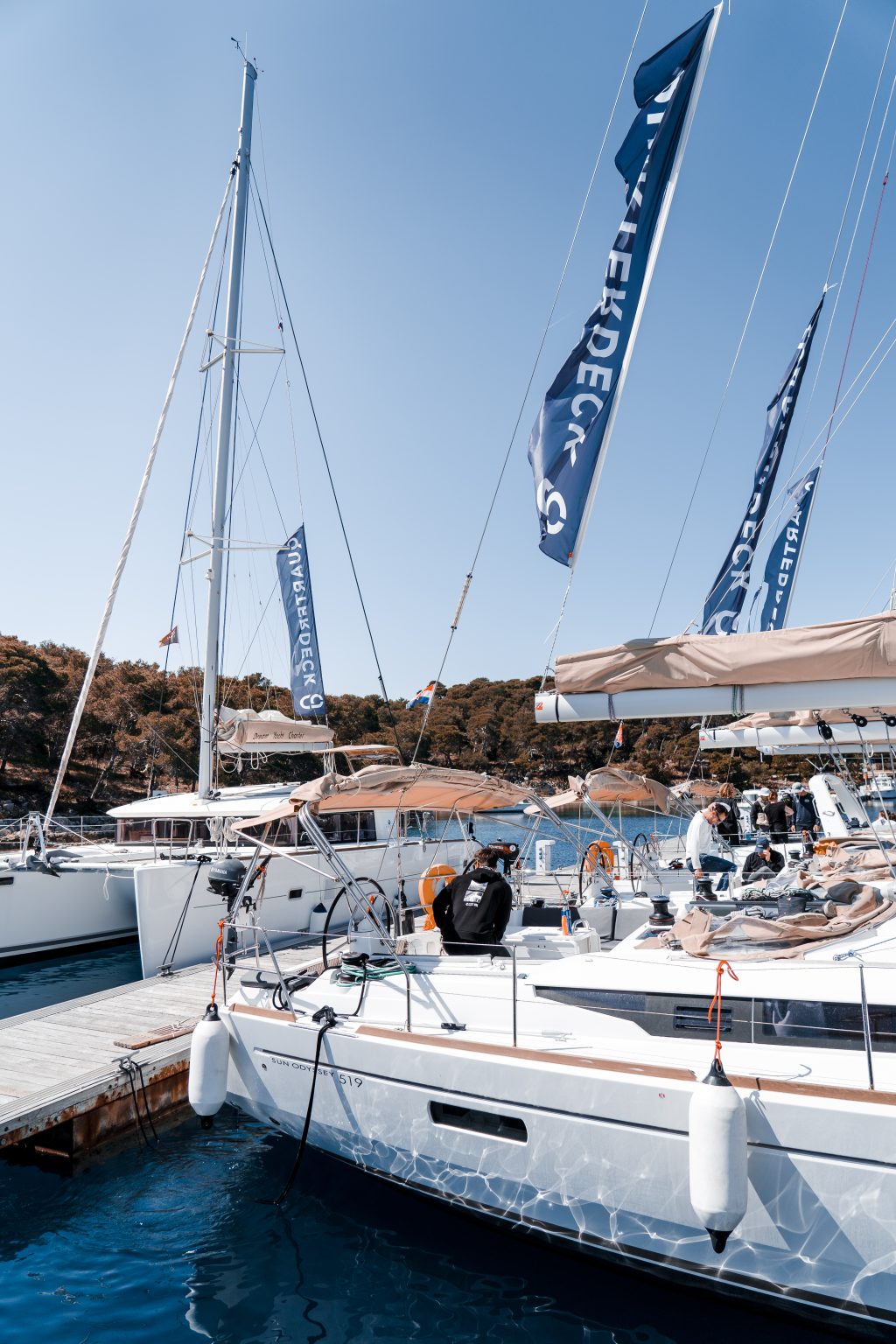
Seasonal pressure is the defining feature of charter fleet electrical work. The Mediterranean season runs from May through October, and every week of the charter schedule depends on yachts being operational. Electrical failures that in a domestic context might wait a day or two for an appointment become urgent call-outs that need resolution before a new group of guests board on Saturday morning.
The work is physical, often carried out in confined bilge spaces, engine rooms and cockpit lockers in summer heat. Travel between vessels and marinas is routine. The ability to diagnose quickly and have the right parts available is as important as technical knowledge.
Superyacht ETO Work
Live-aboard ETO roles involve the standard superyacht schedule: extended periods at sea or in port, travel across global itineraries, and availability throughout the working day when guests are aboard. When systems fail during a charter week, the ETO is the first point of contact regardless of the hour.
Rotational contracts on larger vessels offer genuine downtime between rotations, which is one of the most valued aspects of the role for those who have reached that level. The lifestyle is demanding during rotations and genuinely restful between them.
Yacht Electrician and ETO Salaries
Freelance marine electricians working across charter fleets or boatyards typically charge day rates or project rates rather than receiving a salary. Rates vary by region, specialisation and reputation, and are comparable to skilled electrical trades in the relevant country.
An ETO or Electrician on a superyacht would usually earn a salary of between £2,000 and £3,500 per month, depending on experience and the scope of the position. This reflects mid-range superyacht positions with accommodation, meals and travel included.
At the senior end of the market, junior ETOs start at $3,500-$5,000 per month, ETOs on 70-90m yachts earn $6,000-$7,500 per month, and senior ETOs on 90m+ superyachts can earn $7,000-$9,000 or more per month. Accommodation, meals, travel and health insurance are typically included, which substantially increases the effective value of the package.
AV and IT specialisation commands a meaningful premium. ETOs with AV/IT expertise command 15-25% above standard ETO rates, with senior positions and cybersecurity specialisation reaching significantly higher total compensation packages.
Tips are part of the compensation structure on charter yachts. ETOs on charter yachts share in guest tips along with other crew, typically ranging from $1,500 to $3,500 or more per charter week during peak Mediterranean or Caribbean season.
Yacht Electrician vs Yacht Mechanic vs Marine Engineer
Salary varies considerably depending on the type of role, the size of the vessel and the level of experience.
Freelance marine electricians working across charter fleets or boatyards typically charge day rates or project rates rather than receiving a salary. Rates vary by region, specialisation and reputation, and are comparable to skilled electrical trades in the relevant country.
For superyacht ETO roles, mid-range positions typically pay between €2,500 and €4,000 per month, depending on experience and the scope of the position, with accommodation, meals and travel included. At the senior end of the market, experienced ETOs on larger yachts (70m+) earn €6,000-€8,500 or more per month. Note that the superyacht industry often quotes salaries in USD, particularly for larger international vessels, so figures can vary depending on the source and exchange rate at the time.
AV and IT specialisation commands a meaningful premium. ETOs with AV/IT expertise typically command 15-25% above standard ETO rates, with senior positions and cybersecurity specialisation reaching significantly higher total compensation.
Tips are part of the compensation structure on charter yachts. ETOs on charter yachts share in guest tips along with other crew, which during peak Mediterranean or Caribbean season can add meaningfully to the base salary.
How to Get Into Yacht Electrician and Marine ETO Jobs
The pathway into yacht electrical work depends on where you are starting from.
From a Land-Based Electrical Trade Background
The most common and well-established route. A qualified electrician with an NVQ Level 3 or equivalent and experience in domestic, commercial or industrial installation can transition into marine electrical work through:
- ABYC Electrical Certification (widely recognised in charter and private yacht markets)
- Obtaining ABYC Electrical Certification, which is specifically valued in the marine industry
- Building familiarity with DC systems and marine-specific components, which differ from land-based installations
- Seeking employment or freelance work with a marina, boatyard or marine electrical company to build a track record

From an Electronics, IT or AV Background
Shore-based IT and AV professionals with networking, systems integration or audiovisual expertise have a well-recognised pathway into superyacht ETO roles. Many ETOs come from shore-side IT and AV backgrounds. Technical skills transfer well; what is additionally required is STCW certification and willingness to adapt to the yacht environment.
From a Marine Engineering Background
Those with marine engineering qualifications or experience on commercial vessels or in the offshore sector have a strong foundation for superyacht ETO or senior electrician roles. MCA engineering certifications are the most recognised route for formal progression on larger vessels.
Already Qualified and Experienced
If you have marine electrical or ETO experience and are looking for your next placement, the most practical step is getting your profile in front of the right operators and fleet managers.
Got the qualifications and experience? Register your profile and get listed on the Quarterdeck staff marketplace, where charter operators and fleet managers search for available technical crew.
FAQ
What does a yacht electrician do?
A yacht electrician installs, maintains and repairs the electrical systems of marine vessels. This includes DC and AC circuits, battery banks, charging systems, generators, lighting, navigation electronics and marine communications. On larger superyachts, this role expands into the full ETO (Electro-Technical Officer) remit, covering AV and IT systems, automation and bridge electronics.
What is the difference between a yacht electrician and an ETO?
A yacht electrician focuses on physical electrical systems: wiring, circuits, batteries, generators and navigation electronics. An ETO (Electro-Technical Officer) is a formal maritime rank found primarily on larger superyachts, with a broader scope covering all electrical, electronic, AV, IT, automation and communications systems. ETOs are live-aboard crew members; yacht electricians more often work across multiple vessels from a marina or boatyard base.
How do you become a yacht electrician?
The most common route is through a recognised land-based electrical qualification (NVQ Level 3 or equivalent) followed by marine-specific training such as the Marine Electrician Level 3 apprenticeship or ABYC Electrical Certification. Building experience in a marina, boatyard or with a marine electrical company then establishes a track record in the marine sector.
What qualifications do yacht electricians need?
For shore-based and charter fleet work, a recognised electrical qualification and ABYC Electrical Certification are the standard expectations. For superyacht ETO roles, STCW Basic Safety Training and an ENG1 medical certificate are mandatory, with the STCW ETO Certificate of Competency (III/6) required for larger commercial vessels.
How much do yacht electricians earn?
Earnings vary significantly by role type. Freelance marine electricians working across charter fleets charge day or project rates comparable to skilled electrical trades in their region. For superyacht ETO roles, mid-range positions typically pay between €2,500 and €4,000 per month. Experienced ETOs on larger yachts earn considerably more, with senior positions on 70m+ vessels reaching €6,000-€8,500 per month or above, with accommodation, meals and travel included in all cases. Note that the superyacht industry often quotes salaries in USD, so figures can vary depending on the source and exchange rate.
What systems do yacht electricians work on?
DC and AC electrical systems, battery banks (including lithium systems), generators, shore power connections, charging systems, navigation electronics (chartplotters, AIS, VHF, radar, autopilot), marine communications, and on larger vessels AV and IT systems, automation platforms and integrated bridge management systems.
What is the difference between a yacht electrician and a marine engineer?
A yacht electrician specialises in electrical systems. A marine engineer has broader responsibility covering propulsion, mechanical systems, hydraulics and hull engineering, in addition to electrical oversight. On larger vessels these are separate roles within the engineering department. On smaller charter yachts, one person often covers both.